Trending Topics
Rashtrapati Bhavan: Lutyens Statue Replaced By Rajajis - A Bold Step Towards Decolonization
Feb. 24, 2026, 3:24 p.m. | Santoshadmin
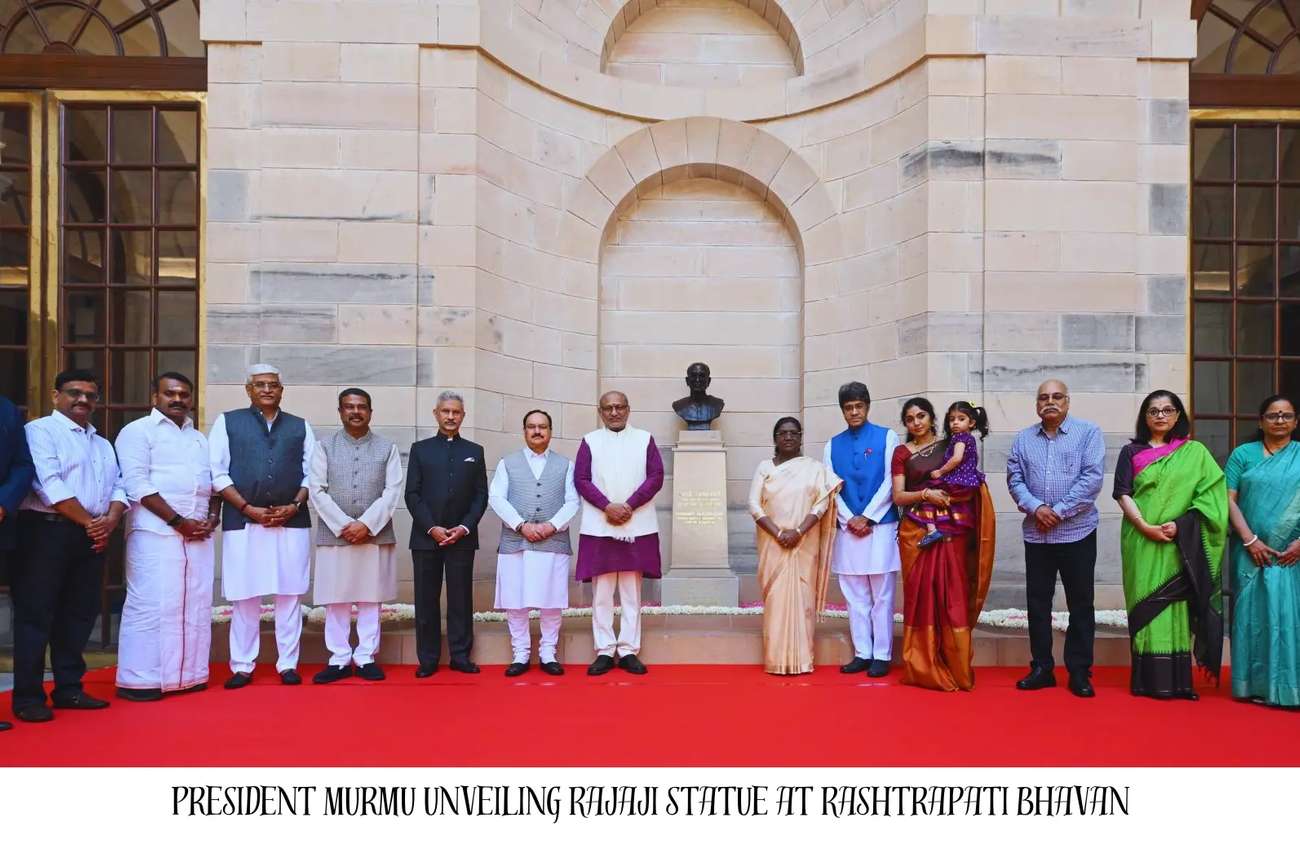
Image by:Official Rashtrapati Bhavan
India marks a pivotal moment in its post-independence journey as President Droupadi Murmu unveiled the statue of freedom fighter and last Governor-General C. Rajagopalachari (Rajaji) at Rashtrapati Bhavan, replacing the statue of British architect Edwin Lutyens. This gesture symbolizes liberation from colonial mindset, with PM Narendra Modi hailing the 'Rajaji Utsav' as a celebration of indigenous pride.
The Unveiling Ceremony: A Historic Shift
On February 24, 2026, President Murmu presided over the emotional unveiling at Rashtrapati Bhavan, declaring Rajaji's statue a beacon of India's cultural adoption. The event drew dignitaries, historians, and citizens, underscoring the shift from symbols of subjugation to icons of self-reliance. Lutyens' statue, designer of the grand Viceroy House (now Rashtrapati Bhavan), will be relocated to Coronation Park, preserving history without glorifying empire.
PM Modi commended the initiative, stating India is shedding slavery's remnants. The ceremony coincided with 'Rajaji Utsav', featuring cultural performances, speeches, and tributes, fostering national reflection on decolonization.
Who Was C. Rajagopalachari? Legacy Of A Multidimensional Leader
Chakravarti Rajagopalachari (1878-1972), fondly called Rajaji, was a towering figure in India's freedom struggle and post-independence nation-building. As the only Indian Governor-General after Lord Mountbatten, he bridged colonial exit with republican dawn. A close associate of Gandhi, he led the Salt Satyagraha in Tamil Nadu and founded the Indian National Congress's Swatantra Party, advocating free-market reforms ahead of his time.
Rajaji's contributions spanned governance: Premier of Madras Presidency, Home Minister, and founder of Gandhigram Rural Institute. His seminal book 'Hinduism: Doctrine and Way of Life' defended pluralism amid partition riots. Critics note his opposition to Hindi imposition and reservation policies, yet his integrity earned bipartisan respect. Installing his statue honors unsung constitutionalists over imperial architects.
This move revives interest in Rajaji's Veda-inspired ethics, influencing modern leaders balancing tradition with progress.
Symbolism Of Removing Lutyens' Statue: End Of Colonial Icons
Edwin Lutyens co-designed New Delhi's architecture, blending Mughal and Western styles to affirm British permanence. His statue at Rashtrapati Bhavan evoked empire; its removal to Coronation Park—a site of forgotten colonial milestones—signals closure. President Murmu emphasized this as embracing Bharat's ethos, not erasure of history.
Similar steps include renaming Rajpath to Kartavya Path and removing Victoria Memorial influences. Historians applaud it as psychological decolonization, freeing public spaces for desi heroes like Rajaji, Subhas Bose, or Ambedkar.
Rajaji Utsav And Exhibition: Immersing In A Legend's Life
From February 24 to March 1, 2026, Rashtrapati Bhavan hosts a public exhibition on Rajaji's life, open to all citizens free of charge. Interactive displays cover his freedom fight, governance reforms, writings, and environmental advocacy—like pioneering van mahotsavs. Rare photos, letters to Gandhi, and artifacts showcase his simplicity: he donated personal wealth to schools.
PM Modi's praise elevates the Utsav, with events like seminars on ethical governance and youth quizzes. Schools across India integrate it into curricula, sparking patriotism. The festival culminates in tree-planting drives, honoring Rajaji's conservation ethos.
Visitors report transformative experiences, connecting past sacrifices to present duties.
PM Modi's Vision: Shedding Colonial Baggage
Prime Minister Modi framed the change as "decolonizing the mind," aligning with initiatives like 'Panch Pran' for 2047. His announcement amplifies the narrative: from statues to street names, India reclaims narratives. Social media buzzes with #RajajiAtRastrapatiBhavan, blending pride and debate on selective history.
This resonates amid global decolonization waves, positioning India as a cultural sovereign.
| Aspect | Lutyens Era Symbolism | Rajaji's New Symbolism |
|---|---|---|
| Architecture | Imperial grandeur | People's governance |
| Legacy | Colonial dominance | Freedom & ethics |
| Relocation | Coronation Park | Permanent honor at heart of power |
| Message | Subjugation memory | Self-reliance pride |
Broader Impact On India's Cultural Reclamation
The swap accelerates removing 1,000+ colonial symbols nationwide, from statues to curricula. States like Tamil Nadu plan Rajaji memorials; Karnataka eyes similar honors. It boosts cultural tourism: Rashtrapati Bhavan expects 50,000 exhibition visitors.
Critics argue balance—preserving Lutyens' genius without pedestalizing. Yet, proponents see it as elevating Rajaji's underrepresented role, inspiring women leaders like Murmu.
Economically, Utsav spurs book sales of Rajaji's works and merchandise, sustaining legacy.
Challenges and Future of Decolonization Drive
Balancing veneration with historical nuance remains key; oversimplification risks ahistoricism. Legal hurdles for relocations exist, but public support surges. Future targets: more Governor-General honors, digital archives.
The exhibition educates Gen Z on Rajaji's anti-corruption stance, relevant amid 2026 polls.
Global Echoes: India's Soft Power Assertion
Internationally, outlets like BBC cover it as "India reimagines heritage," enhancing Modi's decolonizer image. Diaspora communities host virtual Utsavs, globalizing Rajaji's pluralism.
For scholars, it's a case study in symbolic politics, influencing Africa, Caribbean restitutions.
Why This Matters for Every Indian
Rajaji's statue isn't stone—it's a pledge to ethics over empire. As Murmu noted, it embodies cultural embrace. Visit the exhibition; carry forward his simplicity in daily life.
This milestone cements 2026 as decolonization's year, with Rajaji watching over free India.
Related Posts
Prahaar: India's First Anti-Terror Policy - What It Is And Why It Was Introduced
India has finally formalized its first comprehensive National Counter-Terrorism Policy named 'PRAHAAR', marking a decisive shift in combating evolving terror …
Read more...
Pm Modi's Historic Israel Visit: Forging The Hexagon Alliance Against Radical Threats
Prime Minister Narendra Modi embarks on a crucial two-day official visit to Israel starting Wednesday, February 25, 2026, following confirmation …
Read more...