Trending Topics
Prahaar: India's First Anti-Terror Policy - What It Is And Why It Was Introduced
Feb. 23, 2026, 4:02 p.m. | Santoshadmin
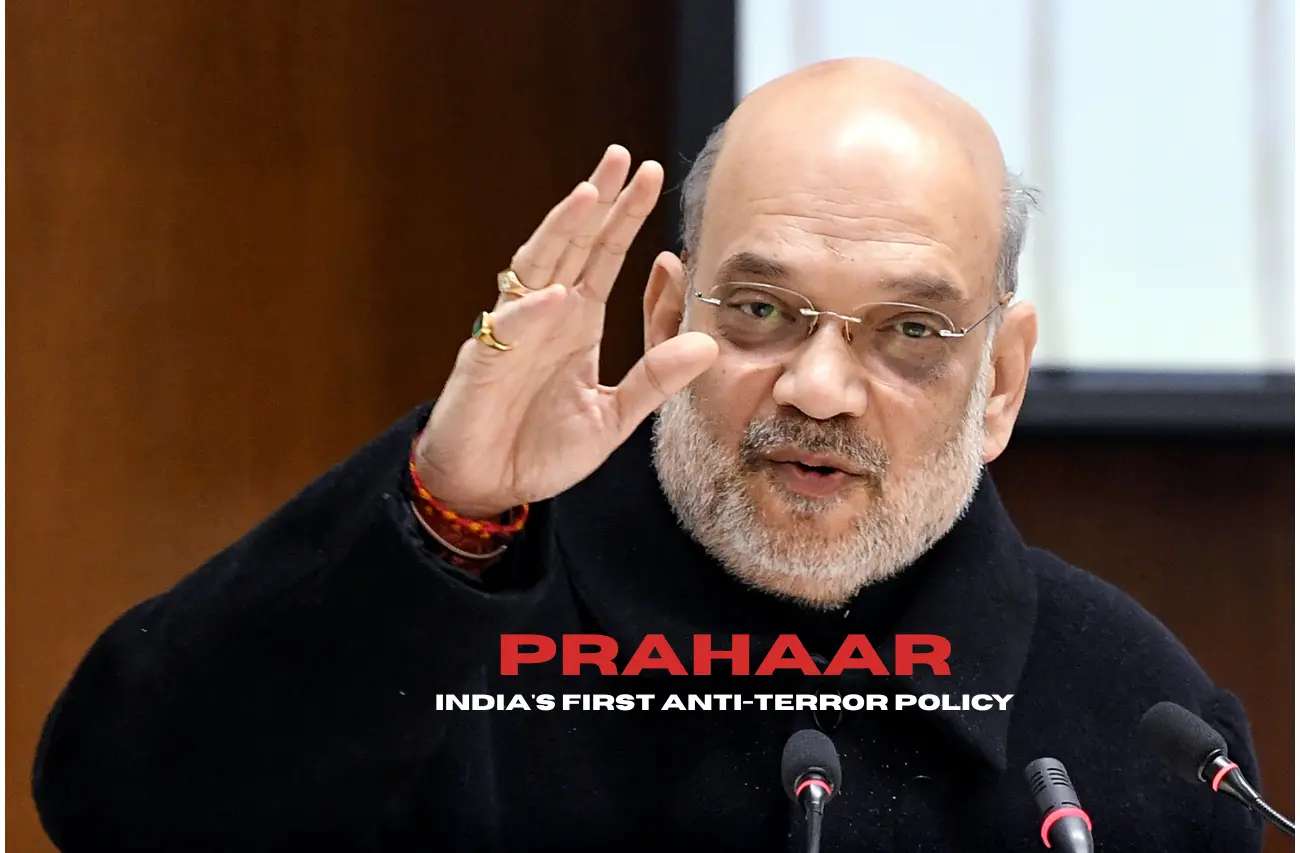
Image by:Ministry of Home Affairs via D
India has finally formalized its first comprehensive National Counter-Terrorism Policy named 'PRAHAAR', marking a decisive shift in combating evolving terror threats. Launched by the Union Ministry of Home Affairs in February 2026, this doctrine emphasizes prevention, swift action, and societal resilience against state-sponsored terrorism and modern challenges like drones and cyber threats.
What is PRAHAAR? Decoding India's Anti-Terror Doctrine
PRAHAAR, meaning "strike" in Hindi, represents a structured national framework uniting intelligence, law enforcement, and military responses under one umbrella. Unlike ad-hoc measures, it institutionalizes a proactive approach, identifying key threats such as jihadist groups, Al-Qaeda, ISIS sleeper cells, and cross-border handlers using advanced tech.
The policy's seven pillars—Prevention, Response, Capacity Building, Human Rights Compliance, Anti-Radicalization, International Cooperation, and Societal Resilience—form its backbone. It positions the Multi-Agency Centre (MAC) and Joint Task Force on Intelligence (JTFI) as hubs for real-time data sharing between central agencies and state police, ensuring threats are neutralized before execution.
Local police serve as first responders, backed by state special forces and the National Security Guard (NSG) for major incidents. The National Investigation Agency (NIA) leads probes, aiming for high conviction rates to deter future attacks. This tiered system addresses past delays seen in operations.
Why Was PRAHAAR Introduced? Addressing Evolving Threats
India faces persistent state-sponsored terrorism from across borders, with groups exploiting ungoverned spaces, drones in Punjab and J&K, and encrypted apps for propaganda. PRAHAAR responds to these by choking terror financing, dismantling over-ground worker (OGW) networks, and disrupting online radicalization ecosystems.
Emerging risks like chemical-biological threats, cyber terrorism, and youth recruitment via social media necessitated a unified doctrine. Past incidents highlighted coordination gaps; PRAHAAR standardizes procedures, modernizes training, and upgrades tech for border forces. It reaffirms zero tolerance, stating terrorism has no religion, nationality, or justification.
Regional instability and foreign extremists plotting from afar prompted this policy. By focusing on prevention over reaction, it aims to safeguard critical infrastructure like railways, ports, and nuclear sites, reducing vulnerabilities in a tech-driven threat landscape.
Core Pillars of PRAHAAR: A Multi-Layered Strategy
Prevention and Intelligence-Led Action
Real-time intel fusion via MAC/JTFI targets OGW networks and funding channels. Proactive disruption includes monitoring internet misuse for recruitment, with graded responses to radicalized individuals.
Swift and Proportionate Response
Tiered architecture ensures rapid deployment: local police first, then NSG for high-impact ops. Emphasis on SOPs prevents operational silos.
Capacity Building and Tech Upgrades
Modern equipment for forces, state-level counter-terror units, and AI-driven surveillance counter drones and cyber tools.
Human Rights and Legal Safeguards
Operations comply with UAPA, new criminal codes, and global norms, balancing security with civil liberties.
Anti-Radicalization Measures
Community outreach with NGOs, religious leaders, youth programs, and prison monitoring address root causes like socio-economic vulnerabilities.
International Cooperation
Collaborates globally to dismantle networks, extradite handlers, and share best practices.
Societal Resilience
Post-attack recovery, community rebuilding, and awareness campaigns foster a terror-resilient nation.
| Pillar | Key Focus Areas | Expected Impact |
|---|---|---|
| Prevention | MAC/JTFI intel sharing, OGW disruption | Attacks stopped pre-execution |
| Response | NSG deployment, NIA probes | High conviction rates |
| Capacity Building | Tech upgrades, training | Enhanced border security |
| Anti-Radicalization | Youth engagement, deradicalization | Reduced recruitment |
| Resilience | Community recovery | Long-term stability |
Impact On National Security Landscape

PRAHAAR builds on successes post-Article 370, neutralizing terror ecosystems amid declining incidents. It equips India against hybrid threats, from J&K infiltrations to urban sleeper cells. Experts predict fewer breaches, with states strengthening Anti-Terrorism Squads (ATS).
The policy's public release on MHA's website promotes transparency, inviting stakeholder inputs for refinements. Investments in emerging tech like drone detectors signal future-proofing.
Challenges and Road Ahead for Implementation
While comprehensive, PRAHAAR faces hurdles like inter-state coordination and resource allocation. Periodic legal reforms and tech investments are crucial. Success hinges on community trust-building to counter radicalization narratives.
Monitoring metrics include attack prevention rates, conviction percentages, and radicalization drops. Annual reviews ensure adaptability to new threats like AI-generated propaganda.
Global Context and India's Leadership Role
PRAHAAR aligns with UN resolutions, positioning India as a counter-terror leader. It counters Pakistan-based outfits while engaging neighbors. Sharing frameworks with QUAD partners amplifies impact.
For citizens, it promises safer lives without compromising rights. Aspirants in security exams like UPSC will find this a key topic, highlighting policy evolution.
Why PRAHAAR Marks a Historic Milestone
This first-of-its-kind doctrine transforms reactive policing into a holistic strike force. By addressing tech-savvy terror, it secures India's future. As threats evolve, PRAHAAR stands ready—prevention first, resilience always.
Related Posts

Bafta Awards 2026: 'Boong' Achieves Historic Win For Indian Cinema On London Stage
An Indian film titled 'Boong', produced under Farhan Akhtar's Excel Entertainment banner, has clinched major success at the British Academy …
Read more...
Rashtrapati Bhavan: Lutyens Statue Replaced By Rajajis - A Bold Step Towards Decolonization
India marks a pivotal moment in its post-independence journey as President Droupadi Murmu unveiled the statue of freedom fighter and …
Read more...