Trending Topics
Pm Modi Cyprus Visit: A Strategic Leap For India\'S Global Influence
June 16, 2025, 3:34 p.m. | Santoshadmin
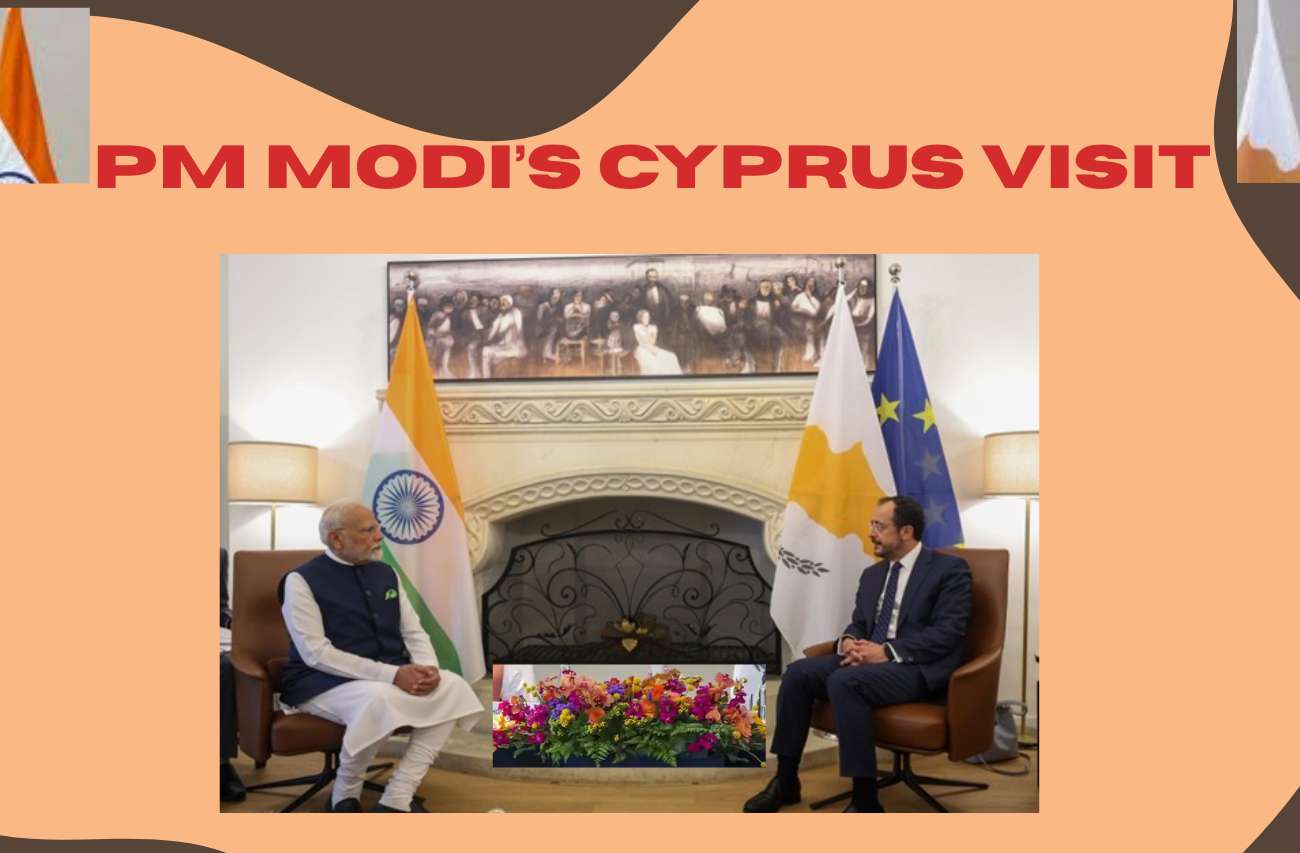
Prime Minister Narendra Modi’s recent visit to Cyprus marks a watershed moment for Indian diplomacy, signaling a bold new phase in the country’s engagement with the Eastern Mediterranean and Europe. As the first Indian Prime Minister to set foot on the island in over two decades, Modi’s trip was far from ceremonial. Instead, it was a calculated, multifaceted move designed to strengthen India’s strategic partnerships, counterbalance regional adversaries, and unlock new economic opportunities. Let’s explore why this visit matters more than meets the eye.
Why Cyprus Matters to India
Cyprus, a small but geopolitically significant island nation in the Eastern Mediterranean, sits at the crossroads of Europe, Asia, and the Middle East. Despite its modest size, it holds outsized importance for India’s foreign policy for several reasons.
1. Strategic Geography and Connectivity
Cyprus is a member of the European Union (EU) despite its geographic location in Asia, making it a unique gateway for India’s ambitions in Europe. Its ports and maritime infrastructure are seen as potential hubs for trade corridors linking India to Europe, especially as India advances its India-Middle East-Europe Economic Corridor (IMEC) initiative. This corridor aims to facilitate seamless trade via maritime and rail routes, reducing dependence on traditional chokepoints and diversifying India’s trade pathways.
2. Energy and Economic Synergies
The Eastern Mediterranean is a hotspot for natural gas exploration, with Cyprus at the center of regional tensions over energy resources. India, keen to diversify its energy sources, is exploring partnerships in this sector. Cyprus’s potential as a source of foreign investment is also notable, with a Double Taxation Avoidance Agreement (DTAA) already in place between the two countries, and ongoing discussions to further enhance commercial links.
3. Diplomatic Alignment and Support
Cyprus has consistently supported India’s positions on critical issues such as Kashmir, cross-border terrorism, and UN Security Council reforms. The island nation has also endorsed India’s bids for multilateral groups like the Nuclear Suppliers Group (NSG) and backed the India-US Nuclear Deal. This alignment is particularly valuable as India seeks to consolidate international support for its global initiatives.
The Turkey Angle: Countering Regional Rivalry
Modi’s visit to Cyprus carries an unmistakable message to Turkey, which has deepened its ties with Pakistan in recent years. Turkey’s support for Pakistan—especially during recent military confrontations—has been a cause for concern in New Delhi. By strengthening ties with Cyprus, a country with a long-standing territorial dispute with Turkey, India is subtly countering Ankara’s influence in the region.
Turkey is the only country to recognize the self-declared Turkish Republic of Northern Cyprus, which occupies the northern third of the island following a 1974 military intervention. India, by contrast, maintains relations only with the internationally recognized Republic of Cyprus. Modi’s visit to the Green Line—the de facto border between the Republic of Cyprus and Northern Cyprus—was a powerful symbolic gesture of solidarity with Nicosia and a reaffirmation of India’s commitment to sovereignty and territorial integrity.
Deepening Bilateral Ties: From Defense to Digital
Defense and Security Cooperation
One of the most significant outcomes of Modi’s visit was the commitment to strengthen defense and security cooperation. The two countries had already signed a Bilateral Defence Cooperation Programme in January 2025, and the visit provided an opportunity to give concrete shape to this partnership. Both leaders agreed to establish cyber and maritime security dialogues and a mechanism for real-time exchange of information on terrorism, drugs, and arms trafficking. This is especially important for Cyprus, which faces ongoing security challenges from Turkey, and for India, which is keen to bolster its counter-terrorism efforts internationally.
Economic and Technological Collaboration
Beyond security, the visit laid the groundwork for enhanced cooperation in trade, technology, renewable energy, connectivity, and tourism. Modi addressed business leaders in Limassol, setting the stage for deeper commercial engagement. The establishment of a five-year roadmap for bilateral cooperation signals a long-term commitment to partnership across multiple sectors.
Counter-Terrorism and Shared Values
Modi expressed gratitude to Cyprus for its unequivocal condemnation of the April 2025 terrorist attack in Pahalgam, reaffirming the two countries’ shared resolve against terrorism. He reiterated India’s consistent support for a peaceful resolution to the “Cyprus Question” based on UN Security Council resolutions and international law. This mutual support on issues of sovereignty and territorial integrity is a cornerstone of the evolving partnership.
The Bigger Picture: India’s Mediterranean Strategy
Modi’s visit is part of a broader Indian strategy to deepen engagement with Mediterranean nations. After elevating ties with Greece, New Delhi is now courting Cyprus, recognizing its role as a bridge between Europe and the Middle East62. This strategy is driven by several geopolitical and economic imperatives:
-
Countering the Turkey-Pakistan Axis: By aligning with countries that have disputes with Turkey, India is building a network of partners to counterbalance Ankara’s influence, especially given Turkey’s support for Pakistan23.
-
Advancing the IMEC Corridor: Cyprus’s strategic location and maritime connectivity make it a key node in the proposed India-Middle East-Europe Economic Corridor, which aims to transform regional trade dynamics12.
-
Strengthening India-EU Ties: With Cyprus set to hold the rotating presidency of the EU Council in 2026, Modi’s visit paves the way for deeper collaboration with the EU, providing India with greater diplomatic leverage in Europe21.
Symbolism and Substance
Modi’s visit was rich in symbolism. The warm reception at the airport by President Christodoulides, the joint visit to the Green Line, and the public statements of mutual respect and solidarity all underscored the depth of the relationship. Modi’s remark that “the friendship between India and Cyprus is neither made by circumstances, nor bound by boundaries” captured the essence of this partnership—rooted in shared values and strategic interests rather than transient geopolitical shifts.
Looking Ahead: A Roadmap for the Future
The establishment of a five-year roadmap for cooperation is perhaps the most tangible outcome of the visit. This framework will guide collaboration in defense, security, trade, technology, and other areas, ensuring that the momentum generated by Modi’s visit is sustained. The proposed cyber and maritime security dialogues, along with mechanisms for real-time information sharing, reflect a forward-looking approach to addressing emerging threats.
As Cyprus prepares to assume the EU Council presidency in 2026, India’s strengthened ties with Nicosia will provide a platform for greater engagement with the European Union. This is especially timely, given the challenges India faces in its relations with other Western partners, such as Canada, ahead of the G7 summit.
Conclusion: A New Chapter in Indian Diplomacy
Prime Minister Narendra Modi’s visit to Cyprus is a strategic leap for India’s global influence. By deepening ties with a key Mediterranean partner, India is not only countering regional rivals but also positioning itself as a proactive player in shaping the future of Eurasian connectivity and security. The visit underscores India’s commitment to a rules-based international order, respect for sovereignty, and the pursuit of shared prosperity.
In an era of shifting alliances and intensifying geopolitical competition, Modi’s Cyprus visit is a reminder that India is charting its own course—one that is strategic, principled, and ambitious. As the world watches, India’s partnership with Cyprus is poised to become a model for how middle powers can leverage diplomacy to achieve both national and regional goals.
Expanded Analysis: Why This Visit Matters More Than Ever
The significance of Modi’s Cyprus visit extends beyond the immediate diplomatic gains. Here’s a deeper look at the strategic, economic, and symbolic dimensions of this engagement.
Strategic Significance
Cyprus’s unique position as an EU member in the Eastern Mediterranean makes it a valuable partner for India’s “Look West” policy. The island’s ports and maritime infrastructure are critical for India’s ambitions to establish alternative trade routes to Europe, bypassing traditional chokepoints like the Suez Canal. This is especially relevant in the context of ongoing tensions in the Middle East and the need for resilient supply chains.
Moreover, Cyprus’s support for India in international forums—be it on terrorism, UN reforms, or energy security—strengthens India’s diplomatic hand. As India seeks to expand its influence in multilateral institutions, having reliable partners like Cyprus is invaluable.
Economic Opportunities
Cyprus is a significant source of foreign investment in India, and the existing DTAA provides a robust framework for further economic collaboration. The discussions in Limassol highlighted the potential for joint ventures in technology, renewable energy, and tourism. With both countries committed to a green transition, partnerships in renewable energy could be a game-changer.
The IMEC corridor, if realized, would transform trade between India and Europe, with Cyprus playing a pivotal role as a gateway. This would open up new markets for Indian goods and services and reduce dependency on traditional routes.
Countering Terrorism and Promoting Stability
The shared commitment to counter-terrorism is a cornerstone of the India-Cyprus partnership. Both countries have faced threats from terrorism and understand the importance of international cooperation in combating this menace. The establishment of mechanisms for real-time information sharing on terrorism, drugs, and arms trafficking is a significant step forward
India’s support for a peaceful resolution to the Cyprus Question, based on UN resolutions and international law, reinforces its commitment to a rules-based global order. This principled stance enhances India’s credibility as a responsible global actor
Symbolic Gestures and Public Diplomacy
The visit to the Green Line was a powerful symbolic gesture, demonstrating India’s solidarity with Cyprus on the issue of territorial integrity. Modi’s public statements and the warm reception he received underscored the personal chemistry between the leaders and the depth of the bilateral relationship.
Such gestures are not just about optics; they send a clear message to regional and global audiences about India’s priorities and alliances. In an era of information warfare and soft power competition, public diplomacy matters more than ever.
Conclusion: A Vision for the Future
Prime Minister Narendra Modi’s visit to Cyprus was a masterstroke in India’s foreign policy, blending symbolism, strategy, and economic ambition. By reinforcing ties with Cyprus, India not only strengthened its Mediterranean presence but also sent a pointed message to Turkey amid rising regional tensions. The focus on trade, the IMEC, and defense cooperation highlights India’s multifaceted approach to global engagement, positioning it as a key player in a multipolar world. As Cyprus prepares for its EU presidency in 2026, the visit lays the foundation for a partnership that could shape India-EU relations and redefine regional dynamics in the Mediterranean. Modi’s Cyprus power move is a testament to India’s growing confidence and its unwavering pursuit of strategic interests on the global stage.
None
None
None
None
Related Posts

How Does Liam Dawsons Performance Impact England Cricket Team Strategies
Liam Dawson’s recent standout performances—particularly his match-winning 4-20 in the first T20I against the West Indies—have a significant and multifaceted …
Read more...

Whatsapp 'S New Document Scanner Feature: A Game-Changer For Users
The world of instant messaging is ever-evolving, and WhatsApp, as one of the leading platforms, continues to set new standards. …
Read more...