Trending Topics
What Is Galaxeye: Revolutionizing Earth Observation With Optosar Technology
May 3, 2026, 3:59 p.m. | Santoshadmin
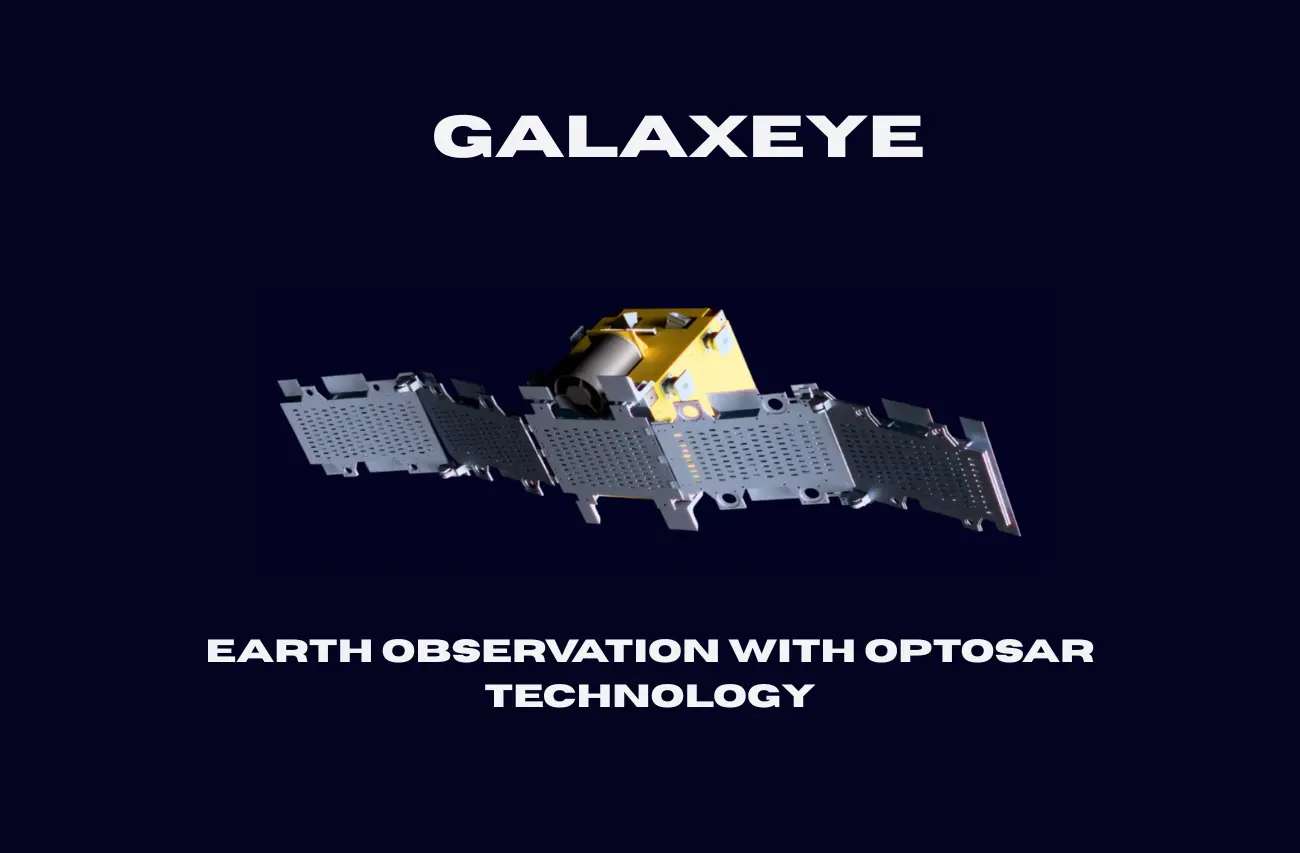
Image by:galaxeye.space
The field of Earth observation has long been hampered by a fundamental challenge: no single technology could deliver both clarity and consistency. Optical satellites produce crystal-clear images that are intuitive to interpret, but clouds, darkness, and adverse weather conditions render them useless. Synthetic Aperture Radar (SAR), on the other hand, operates reliably in all conditions but produces images that are difficult for humans to understand without extensive training. GalaxEye, an innovative Indian space technology startup founded in 2021 at IIT Madras, is solving this age-old problem by creating the world's first satellite that combines both technologies on a single platform. This groundbreaking approach represents a fundamental shift in how we observe and understand our planet. In this comprehensive guide, we explore what GalaxEye is, its revolutionary technology, and why it matters for the future of Earth observation
Understanding Galaxeye: A Brief Overview
GalaxEye is an Indian-headquartered space technology startup that is pioneering a new standard in Earth observation through advanced satellite technology. Founded by a talented team of engineers from the Indian Institute of Technology Madras, the company has quickly established itself as a leader in the NewSpace sector. The startup's flagship mission, called Mission Drishti, represents India's largest privately built satellite and marks a significant milestone in the country's commercial space industry.
The company operates with a clear vision: to make every square kilometer of Earth intuitively observable, regardless of weather conditions, time of day, or terrain. This ambitious goal is being achieved through GalaxEye's proprietary SyncFusion™ technology, which enables unprecedented integration of optical and radar data on a single satellite platform.
The Innovation Behind Galaxeye: Mission Drishti
Mission Drishti is GalaxEye's flagship satellite and represents the company's answer to Earth observation's most fundamental challenge. What makes Mission Drishti truly revolutionary is its OptoSAR payload, which stands for Optical-Synthetic Aperture Radar. This payload is the world's first commercial multi-sensor satellite combining a high-resolution SAR sensor with a 7-band multispectral imager (MSI) on a single platform.
The satellite measures 1.8 meters in size and delivers imagery at 1.8-meter resolution—the highest resolution available from any privately-operated satellite in India. Scheduled to launch in Q1 2026 aboard a SpaceX Transporter mission, Mission Drishti promises to transform how governments, enterprises, and organizations access and utilize satellite imagery.
The innovation is not merely about adding two sensors to a satellite. Instead, it represents a sophisticated integration where both sensors operate in perfect harmony, capturing data simultaneously from the same platform. By doing so, GalaxEye eliminates the parallax error and temporal gaps that plague traditional approaches where separate satellites must be used to gather optical and radar data.
Understanding Optosar Technology: The Game-Changer
OptoSAR is the heart of GalaxEye's breakthrough innovation. To understand its significance, it helps to first comprehend the limitations of traditional Earth observation approaches. Optical imaging satellites capture detailed visual information that humans instinctively understand. You can see buildings, roads, vegetation, and water bodies with remarkable clarity. However, clouds, fog, rain, snow, and darkness present insurmountable barriers to optical imaging. When it rains or when darkness falls, optical satellites become essentially blind.
Synthetic Aperture Radar technology operates on an entirely different principle. Rather than relying on visible light or infrared radiation, SAR actively sends radio waves toward the Earth and measures the reflections that bounce back. This approach allows SAR to penetrate clouds, operate through darkness, and function in virtually any weather condition. The downside is that SAR imagery is notoriously difficult to interpret. The images appear grainy and abstract to untrained eyes, and extracting meaningful information requires specialized expertise and sophisticated algorithms.
OptoSAR merges these two technologies on a single satellite, capturing both optical and radar data simultaneously during each pass. The optical data provides intuitive visual context and color information, while the SAR data ensures all-weather, day-and-night capability and penetrates obscuring atmospheric conditions. The result is an unprecedented dataset that combines the clarity of optical imaging with the reliability of SAR. This is not merely data fusion in post-processing; rather, both sensors are physically co-located on a thermally-stable optical bench within the same satellite payload, ensuring perfect spatial alignment.
The Syncfusion Technology Stack: More Than Just Hardware
OptoSAR is not simply a hardware achievement. GalaxEye has developed an entire technology stack called SyncFusion™ that integrates hardware and software in perfect harmony. The company has built this entire stack in-house, representing an enormous engineering accomplishment.
On the hardware side, GalaxEye engineered a compact, proprietary payload that houses both the X-Band SAR sensor and the 7-band multispectral imager on a single platform. This physical co-location is critical because it eliminates parallax error at the source. Traditional approaches using two separate satellites introduce inevitable errors due to differences in viewing angle and capture time.
Equally important is the software layer. GalaxEye's artificial intelligence algorithms work both onboard the satellite and on the ground to process the combined data stream. These AI models perform sub-pixel co-registration and jitter correction, ensuring that every data point from both sensors is processed as part of a single, unified dataset. The result is analysis-ready imagery that contains three times more information than standalone sensors could provide.
Technical Specifications Of Mission Drishti
Understanding the technical capabilities of Mission Drishti helps illustrate why this satellite represents such a significant advancement. The SAR sensor operates at X-Band frequency with VV polarization and can operate in both Stripmap and Spotlight imaging modes. In Spotlight mode, the SAR achieves resolution up to 0.9 meters. The multispectral imager captures data across 7 bands, including coastal blue, red edge, and near-infrared wavelengths, with a native ground sample distance of 3.6 meters at nadir. When these datasets are fused, they produce 1.8-meter resolution imagery.
The satellite offers operational capability in all-weather conditions, day and night. The SAR's swath width extends to 30 kilometers, while the MSI covers a 10-kilometer swath. These specifications translate to the ability to image large areas rapidly while maintaining exceptional resolution and detail.
Applications And Use Cases
The breadth of potential applications for OptoSAR technology is enormous. GalaxEye has identified opportunities across multiple sectors, though the company has shown particular interest in defense and security applications. The Indian Army's Northern Command conducted user trials with GalaxEye's drone-based SAR sensor, validating the technology's military utility.
Beyond defense, OptoSAR technology has compelling applications in infrastructure monitoring, where the all-weather capability allows continuous surveillance of critical assets regardless of conditions. Agriculture represents another significant opportunity, where the combination of optical and radar data enables sophisticated crop monitoring and yield prediction. Environmental monitoring, disaster response, urban planning, and climate research all stand to benefit from OptoSAR's unique capabilities.
GalaxEye's Achievements and Recognition
Despite being a relatively young company, GalaxEye has already accumulated impressive achievements and recognition. The startup received notable mention by India's Prime Minister Narendra Modi on the Mann Ki Baat program, highlighting the national significance of the company's work. GalaxEye was featured on Forbes Asia's 2025 Top 100 to Watch list, and was selected among the top 53 AI startups globally at the Gemini Founders Forum 2025.
The company won the prestigious iDEX-DIO Challenge for satellite edge computing and successfully closed a Series-A funding round of $10 million in June 2024, following an earlier seed round of $3.5 million. These financial achievements underscore investor confidence in GalaxEye's technology and business model.
The Founding Team and Vision
GalaxEye was founded by a team of five co-founders, each bringing unique expertise to the venture. Suyash Singh serves as CEO, while Denil Chawda holds the position of CTO. The team also includes Pranit Mehta as VP of Sales and Operations, Kishan Thakkar as VP of Engineering, and Rakshit Bhatt as VP of Product. This deep technical expertise combined with strong business and product sensibility has been crucial to the company's rapid progress.
The founding team operates on core values emphasizing first-principles ingenuity and engineering rigor. Rather than iterating on existing approaches, they fundamentally reimagined Earth observation by asking whether it was possible to combine technologies that many believed could not be integrated on a single platform.
Comparison with Traditional Earth Observation Approaches
To fully appreciate GalaxEye's innovation, it helps to compare OptoSAR with traditional Earth observation methods. Conventional approaches either rely on optical satellites or SAR satellites operating independently. When comprehensive analysis requires both types of data, organizations must acquire imagery from separate satellites. This introduces multiple problems: parallax error due to different viewing angles, temporal gaps as the satellites pass over the same location at different times, increased cost from purchasing multiple datasets, and complexity in data fusion and alignment.
OptoSAR eliminates these problems by capturing aligned optical and radar data simultaneously from a single satellite platform. The imagery is inherently aligned, analysis-ready, and contains significantly more information than either sensor type could provide independently.
Impact on AI and Machine Learning
Another critical advantage of OptoSAR technology lies in its implications for artificial intelligence and machine learning. Training deep learning models on SAR imagery alone is notoriously challenging due to the unintuitive nature of radar imagery. Labeling datasets requires specialized expertise, and the abstract appearance of SAR data makes it difficult for AI models to learn meaningful patterns.
OptoSAR imagery offers a solution. The fused optical and radar data provides intuitive visual clarity while retaining the penetrative capability of SAR. This combination dramatically simplifies dataset labeling, speeds up AI model development, and reduces training costs. For applications like automatic target recognition and change detection, this represents a massive efficiency gain.
The Future of Earth Observation with GalaxEye
GalaxEye has ambitious plans extending beyond Mission Drishti. The company envisions a constellation of five satellites, with Mission Drishti being the first. This constellation approach would enable continuous global coverage and unprecedented frequency of revisits to any given location on Earth.
The company is also developing drone-based SAR systems that operate at altitudes of 0.1 to 1 kilometer, with ability to sustain surveillance for up to four hours and achieve 0.15-meter resolution. These systems have been tested extensively, with the company conducting over 400 test flights and completing live trials with defense and research organizations.
Challenges and Considerations
While GalaxEye's technology is revolutionary, some challenges remain. The company must successfully execute the Mission Drishti launch and validate that space-based OptoSAR performs as designed. Market adoption, pricing models, and competition from established satellite operators like Maxar Technologies and Planet Labs all present ongoing challenges. Regulatory considerations surrounding commercial satellite operations and data access also merit attention.
Conclusion
GalaxEye represents a fundamental breakthrough in Earth observation technology. By integrating optical and radar sensing on a single satellite platform through its proprietary SyncFusion™ technology and OptoSAR approach, the company is addressing a challenge that has limited Earth observation capabilities for decades. Mission Drishti promises to deliver analysis-ready imagery that combines the intuitive clarity of optical imaging with the all-weather reliability of radar, offering three times more information than traditional approaches.
With Mission Drishti scheduled to launch in Q1 2026, GalaxEye stands poised to transform Earth observation for defense, infrastructure monitoring, agriculture, environmental science, and countless other applications. As the company continues to expand its satellite constellation and refine its technology, it is leading India's emergence as a major player in the commercial space industry while fundamentally reshaping how humanity observes and understands our planet.
Related Posts
Samsung Galaxy Watch8 Classic
In today’s fast-moving world, a smartwatch is no longer just a gadget—it’s your personal assistant, fitness coach, and health tracker. …
Read more...