Trending Topics
India Ai Impact Summit 2026 Outcomes: New Delhi Declaration & 250b Investments
Feb. 22, 2026, 9:51 a.m. | Santoshadmin
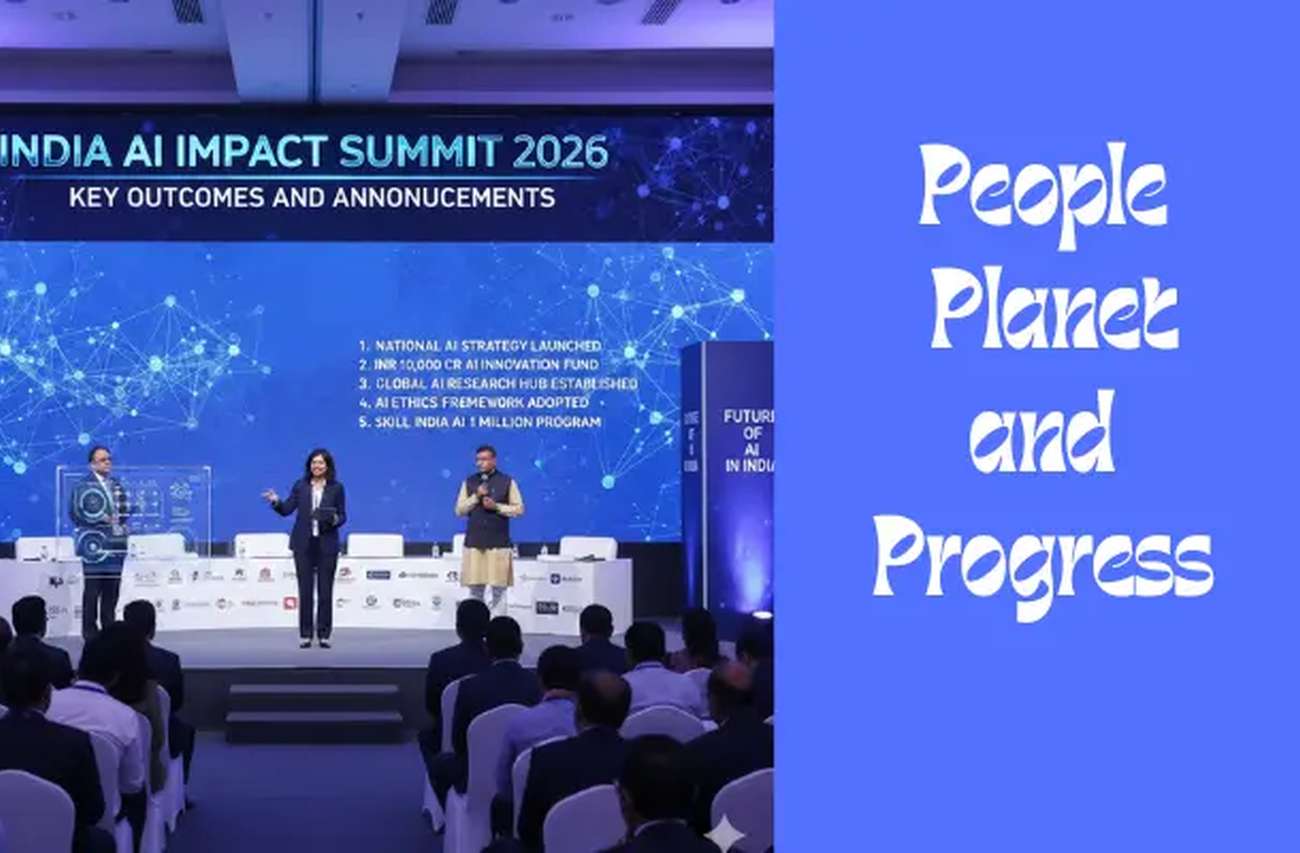
Image by:Ai Generate
The India AI Impact Summit 2026, held February 16–20 at Bharat Mandapam in New Delhi, emerged as a landmark event in the evolving story of artificial intelligence. As the first major global AI summit hosted in the Global South, it shifted the international conversation from risk mitigation and high-level action (seen in prior summits like the UK's 2023 safety-focused gathering and France's 2025 action-oriented event) to real, measurable impact — especially equitable access, sustainable deployment, and benefits for developing nations.
Organized under the IndiaAI Mission and guided by Prime Minister Narendra Modi's vision of "AI for All," the summit attracted over 5 lakh participants, representatives from 118+ countries, world leaders, CEOs from OpenAI, Anthropic, Google, Microsoft, and more. Structured around seven thematic "Chakras" (pillars) — including democratizing resources, trust and safety, energy efficiency, workforce development, scientific advancement, social empowerment, and economic growth aligned with social good — it emphasized the ethos of People, Planet, and Progress.
The event featured 300+ exhibitors, 10+ thematic pavilions, over 500 sessions, and youth-driven initiatives (including a Guinness World Record for the most pledges in an AI responsibility campaign). Despite minor early logistical challenges, the substantive deliverables positioned India as a bridge-builder in global AI governance.
Key Outcomes And Announcements From The Summit
The summit featured high-level plenaries, side events, an expo with 300+ exhibitors across 10+ thematic pavilions, and collaborative initiatives. Several concrete results emerged:
- The New Delhi AI Impact Declaration — A joint statement endorsed by participating nations and organizations committed to human-centric AI that advances inclusive growth, safeguards the global commons, and prioritizes ethical innovation. It emphasized bridging the digital divide, ensuring AI benefits reach underserved populations, and fostering multi-sectoral partnerships.
- Major Corporate Commitments — Google announced a $30 million AI for Science Impact Challenge to support global researchers using AI for scientific breakthroughs, alongside new partnerships for accessible AI tools in public services, education, healthcare, and climate action. Other tech giants highlighted investments in sovereign AI capabilities and exports, with the U.S. promoting American AI technologies for allies.
- Focus on Sectoral Impact — Sessions highlighted AI's role in transforming healthcare (e.g., diagnostics in rural areas), agriculture (precision farming), education (personalized learning), and energy/climate solutions. The World Bank hosted events on AI for jobs, small AI in developing countries, and health systems strengthening.
- India's Leadership Positioning — Prime Minister Modi inaugurated the event, stressing AI as a tool for public good and empowerment. India's IndiaAI Mission served as the backbone, promoting indigenous, ethical ecosystems. The summit aligned with Modi's vision of technology for all, positioning India as a bridge between the Global North and South.
Despite logistical challenges on day one (leading to an apology from IT Minister Ashwini Vaishnaw), the event generated significant buzz, with optimistic speeches like those emphasizing "AI will improve your life" and calls for humanity-first technology.
Immediate Effects On India
In the days and weeks following the summit (as of late February 2026), India experienced a noticeable surge in momentum across its AI ecosystem:
- Boosted Investment and Partnerships — Announcements from global firms translated into accelerated collaborations. India's IT sector, already a global powerhouse, saw renewed interest in AI talent and infrastructure. Reports highlighted ambitions toward a $200 billion AI-related economic contribution in the coming years, with the summit acting as a catalyst for foreign direct investment in compute resources, data centers, and startups.
- Policy and Regulatory Momentum — The summit reinforced India's push for balanced regulation under the IndiaAI Mission. Discussions on sovereign AI and ethical frameworks gained traction, potentially influencing upcoming policies on data localization, compute access, and AI safety benchmarks tailored to developing contexts.
- Public and Startup Ecosystem Buzz — The expo and side events showcased Indian innovations, inspiring startups and researchers. There's increased focus on "small AI" solutions for local problems, with government pledges to expand compute access and skilling programs. The "AI responsibility campaign" and digital pledges encouraged broader societal engagement.
- Geopolitical Leverage — India positioned itself as a moral voice for the Global South, advocating for equitable AI access. This enhanced its soft power, attracting partnerships from smaller nations (e.g., Mauritius, Sri Lanka, Bolivia) and differentiating from U.S.-China dominance in the AI race.
However, some critiques emerged: Amnesty International noted the summit fell short on reining in destructive AI practices by governments and companies, calling for stronger safeguards against misuse.
Global Ripple Effects
The summit's influence extended far beyond India's borders:
- Shift in Global AI Narrative — By prioritizing "impact" over mere safety or action, it reframed AI governance toward outcomes — inclusive growth, sustainable development, and public good. This resonated in the Global South, where resource constraints limit adoption.
- Enhanced Multilateral Cooperation — Building on prior summits, New Delhi fostered continuity with input from the UK, France, South Korea, and others. The declaration set a foundation for ongoing dialogues, potentially influencing future forums.
- Corporate and Innovation Push — Tech leaders' announcements spurred global initiatives. Google's challenge and similar commitments encouraged AI for societal challenges like climate and health, with ripple effects in funding and research collaborations worldwide.
- Geopolitical Dynamics — India emerged as a neutral yet influential player, offering alternatives to U.S.-China binaries. The U.S. used the platform to promote AI exports and sovereignty, while developing countries gained visibility for their priorities.
Long-Term Implications And What Comes Next
The true "GOT effect" (likely referring to a "Game of Thrones"-style dramatic shift or "got" as in obtained/achieved impact) of the India AI Impact Summit 2026 lies in its potential to democratize AI benefits. For India, it solidified its role as an emerging AI superpower focused on responsible, inclusive growth — potentially accelerating GDP contributions from AI, job creation in tech, and solutions for pressing issues like agriculture and healthcare.
Globally, it nudged the conversation toward equity, ensuring AI doesn't widen divides. While immediate chaos highlighted organizational hurdles, the substantive outcomes — declarations, investments, and partnerships — suggest lasting momentum.
As the dust settles, watch for follow-up actions: implementation of the New Delhi Declaration, rollout of announced challenges, and India's hosting of future AI events. The summit didn't just talk about change; it aimed to ignite it, proving that when the Global South leads, the world listens.
Related Posts

Samsung's One Ui 8.5 Beta 4 Arrives For Galaxy S25 With Direct Voicemail
Samsung Galaxy S25 users in the beta program are getting a fresh taste of what's to come with the latest …
Read more...

Hero Of Kishtwar Tyson: The Brave Army Dog Who Took A Bullet For India
Kishtwar's four-legged hero Tyson, an elite German Shepherd from the Indian Army's 2 Para Special Forces, showed extraordinary courage during …
Read more...