Trending Topics
Global Talent Wars : Trump Vs Musk On Indian Workers
Dec. 30, 2024, 2:49 p.m. | Santoshadmin
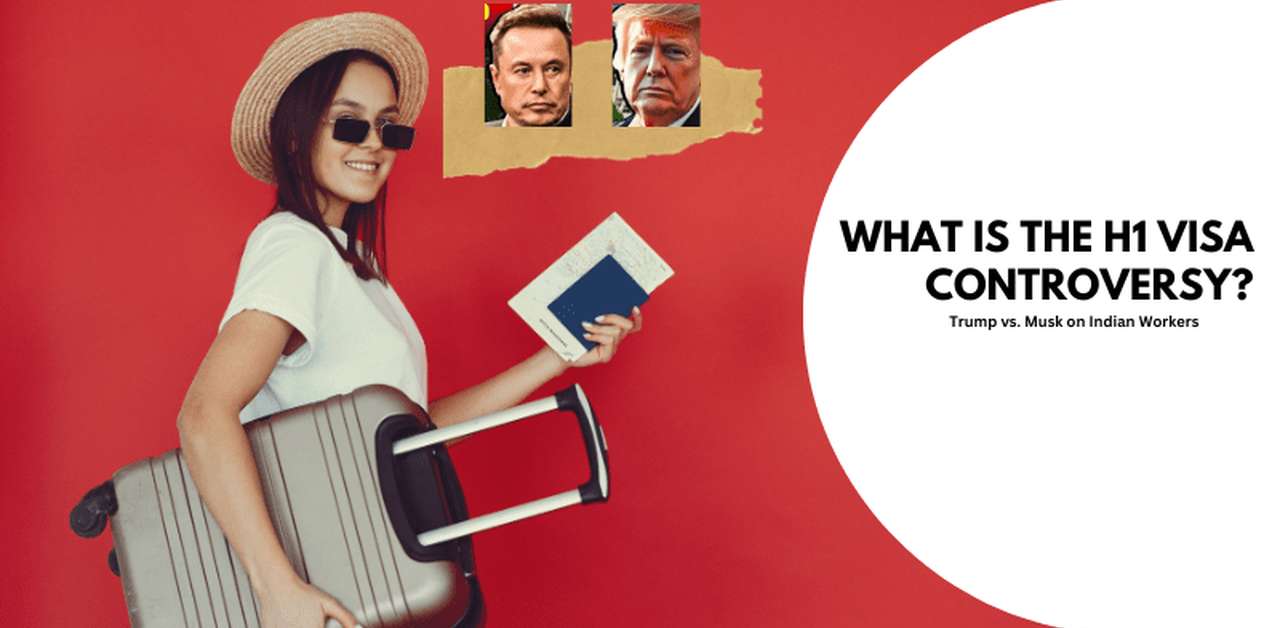
The H1B visa program has long been a cornerstone of America’s tech industry, attracting highly skilled workers, especially from India. However, it has also sparked debates on job security and immigration policies. Recently, former President Donald Trump and Tesla CEO Elon Musk exchanged sharp opinions on the issue, adding fresh fuel to this ongoing controversy.
The Trump Perspective:
Trump has been a vocal critic of the H1B visa program, often arguing that it undercuts American workers. During his presidency, he introduced stricter regulations to ensure that these visas were awarded to the most skilled and highest-paid workers. Trump’s stance emphasizes protecting American jobs and prioritizing domestic talent.
One of the key measures implemented during Trump’s administration was the narrowing of eligibility criteria for H1B applicants. The administration introduced policies requiring employers to demonstrate that no qualified American worker was available before hiring foreign talent. While this resonated with many U.S. workers, it drew criticism from tech giants who rely heavily on global expertise.
Trump also sought to reform the wage structure associated with H1B visas, advocating for higher salaries to ensure that foreign workers would not replace American employees at lower costs. These changes were part of his broader "America First" agenda, which aimed to bolster domestic employment opportunities. However, detractors argued that such policies stifled innovation by discouraging skilled immigrants.
Musk’s Take:
Elon Musk, a visionary entrepreneur and one of the most influential voices in the tech industry, holds a starkly different view. Musk has consistently emphasized the importance of embracing global talent. In his view, restrictive immigration policies could hinder the United States’ ability to attract the brightest minds from around the world.
Musk has frequently praised the contributions of Indian engineers, scientists, and developers to his companies, Tesla and SpaceX. He argues that immigrants—many of whom come through the H1B visa program—are a driving force behind America’s technological advancements. Musk’s vision is rooted in the belief that innovation knows no borders and that a diverse workforce fuels progress.
In recent interviews and social media posts, Musk has called for streamlining the H1B visa process. He has advocated for eliminating bureaucratic hurdles and expanding visa caps to meet the growing demand for tech talent. According to Musk, such reforms are essential to maintaining America’s leadership in industries like artificial intelligence, renewable energy, and aerospace.
The Indian Workers’ Perspective:
For Indian professionals, the H1B visa represents a pathway to fulfilling careers and opportunities to contribute to cutting-edge projects. India consistently accounts for the largest share of H1B recipients, with Indian nationals making up over 70% of these visa holders in recent years.
However, the journey is not without challenges. Long wait times for green card processing—sometimes spanning decades—create uncertainty for workers and their families. Additionally, policy changes and the fear of visa denials often leave applicants in a state of anxiety.
The H1B visa’s dual-purpose nature—benefiting both American companies and foreign talent—has led to contrasting narratives. While workers view it as a stepping stone to the American dream, critics argue that it exploits cheap labor. Bridging this perception gap remains a significant hurdle.
What’s at Stake?
The Trump-Musk debate underscores a larger question: How should the U.S. balance its need for global talent with protecting its domestic workforce? The stakes are high, as the outcome will shape the future of the country’s innovation economy.
Restrictive policies risk driving top talent to competing nations like Canada, which has introduced more immigrant-friendly measures to attract skilled workers. Countries in Europe and Asia are also vying for tech talent, making it imperative for the U.S. to remain competitive.
Conversely, overly lenient policies could fuel domestic resentment and political backlash. Policymakers must navigate these competing priorities to strike a balance that benefits both the economy and society at large.
The Role of Tech Companies:
Major tech firms, including Google, Microsoft, and Amazon, have voiced their support for expanding the H1B visa program. These companies argue that foreign workers fill critical skill gaps, enabling them to innovate and compete globally. Many have also launched initiatives to advocate for immigration reform and provide legal support to H1B applicants.
However, critics contend that tech giants sometimes exploit the system by hiring cheaper foreign labor at the expense of American workers. This critique has led to calls for greater oversight and accountability in the use of H1B visas.
Moving Forward:
As the debate between Trump and Musk highlights, the H1B visa controversy is more than a policy issue; it’s a reflection of America’s broader identity as a land of opportunity. Striking a balance between openness and protectionism will require nuanced solutions and bipartisan cooperation.
Some potential reforms include:
-
Introducing merit-based systems to prioritize the most skilled applicants.
-
Streamlining green card processes to reduce backlogs.
-
Ensuring fair wages and working conditions for visa holders.
Ultimately, the goal should be to create an immigration framework that supports economic growth while addressing legitimate concerns about job security. The outcome of this debate will not only impact Indian workers but also define America’s role in a rapidly evolving global economy.
Final Thoughts:
The clash between Trump and Musk on the H1B visa program underscores a larger dilemma: How can the U.S. sustain its global leadership in technology while addressing domestic workforce concerns? As the debate continues, the resolution will shape the future of global talent mobility and America’s role in the tech world. Whether through restrictive measures or open-door policies, the decisions made today will have lasting implications for generations to come.
None
None
None
None
Related Posts

Nitish Kumar Reddy Stunning Century And The Melbourne Cricket Ground
Nitish Kumar Reddy's exceptional century at the Melbourne Cricket Ground during Day 3 of the fourth Test against Australia was …
Read more...
New Year Epfo's Updated Rules To Benefit Millions Of Employees
As we eagerly welcome the New Year, it’s not just celebrations and resolutions on the horizon but also significant shifts …
Read more...