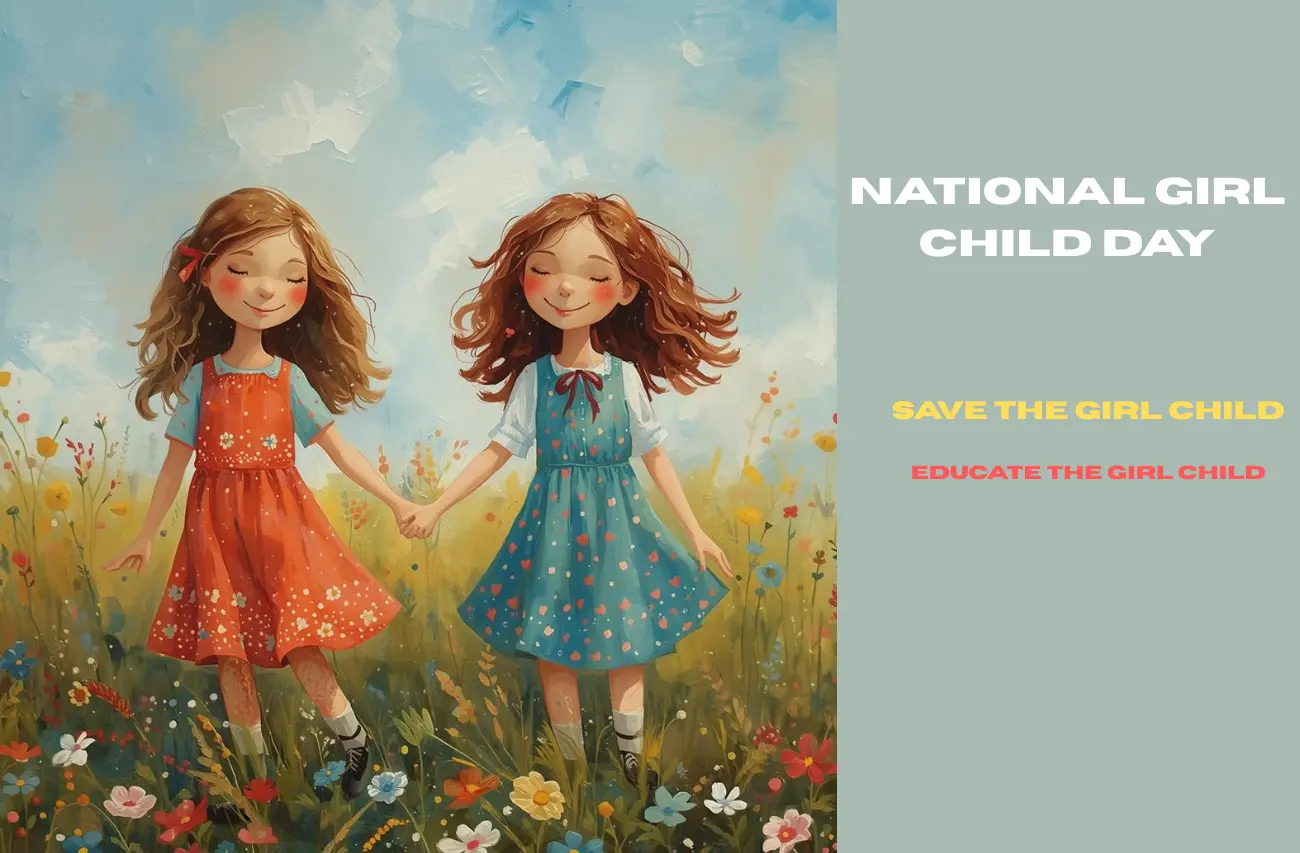
Every year on January 24, India observes National Girl Child Day, a dedicated occasion to celebrate the girl child, highlight her rights, address persistent challenges, and promote her empowerment across all spheres of life. Initiated in 2008 by the Ministry of Women and Child Development, this day serves as a powerful reminder of the need to eliminate gender-based discrimination, ensure equal opportunities, and invest in girls as key drivers of societal progress. In a country where girls have historically faced biases from birth through adolescence and beyond, National Girl Child Day acts as both a celebration of achievements and a call to action against inequalities.
The significance of this day cannot be overstated. Girls represent half the population, yet societal norms, economic constraints, and cultural practices often limit their potential. By focusing on education, health, nutrition, safety, and participation, National Girl Child Day aligns with broader national goals like Beti Bachao Beti Padhao (Save the Girl Child, Educate the Girl Child), launched in 2015. As we mark this day (with the current time being January 2026), recent progress shows improvements in gender ratios and enrollment, but challenges like dropout rates and safety concerns persist. This comprehensive exploration delves into the history, importance, current realities, government efforts, success stories, and ways individuals can contribute to building a brighter, more equitable future for every girl in India.
History and Origin of National Girl Child Day
The roots of National Girl Child Day trace back to growing concerns over declining child sex ratios and widespread gender discrimination in the early 2000s. Census data from 2001 revealed alarming trends, prompting policymakers to act. In 2008, the Ministry of Women and Child Development officially declared January 24 as National Girl Child Day to create nationwide awareness about the rights of girls and the importance of their survival, protection, and development.
The date January 24 was chosen strategically—it falls shortly after National Girl Child Week (January 18–24 in some states) and serves as a focal point for campaigns. Over the years, the day has evolved from awareness drives to include policy announcements, community events, and partnerships with NGOs. It complements global observances like the International Day of the Girl Child on October 11, but remains uniquely tailored to India's socio-cultural context, emphasizing issues like female foeticide, child marriage, and access to education.
Significance of Celebrating National Girl Child Day
National Girl Child Day goes beyond symbolism; it addresses systemic barriers that hinder girls' progress. Key reasons for its importance include:
- Combating Gender Bias — Deep-rooted preferences for sons lead to practices like sex-selective abortions and neglect of girl children. The day promotes the message that girls are equally valuable.
- Promoting Education — Educated girls contribute to healthier families, reduced poverty, and economic growth. Studies show that each additional year of schooling for girls can increase their future earnings by 10–20%.
- Ensuring Health and Nutrition — Girls often receive less nutrition and healthcare, leading to issues like anemia. Awareness campaigns target these disparities.
- Enhancing Safety and Protection — From child marriage to violence, girls face unique risks. The day advocates for safer environments and stronger laws.
- Empowering Future Generations — When girls thrive, societies advance—lower fertility rates, better child health, and inclusive development follow.
In essence, investing in girls yields exponential returns for the nation.
Themes Over the Years and Focus for Recent Celebrations
Themes guide annual campaigns and reflect evolving priorities. For 2025, the theme was “Empowering Girls for a Bright Future”, emphasizing skill-building, digital access, leadership, and breaking stereotypes. While the official 2026 theme may not yet be announced publicly, ongoing discussions highlight preventive healthcare, mental health, digital literacy, and safety in online/offline spaces. These themes build on previous ones like education equity, nutrition, and ending child marriage.
Current Statistics: Progress and Remaining Challenges
India has made notable strides, yet gaps remain:
- Sex Ratio — The child sex ratio (0–6 years) improved from 918 girls per 1,000 boys (2011 Census) to better figures in recent NFHS surveys, though regional variations persist.
- Education Enrollment — Gross Enrolment Ratio (GER) for girls at secondary level reached around 80.2% in 2024–2025 (UDISE data). Female teachers now comprise over 54% of the workforce, inspiring more girls to stay in school.
- Dropout Rates — Primary level dropouts are low (near 0–1% for girls), but rise sharply: upper primary ~3%, secondary ~10–12% (girls slightly better in some reports but still high in rural areas). Post-Class 10, nearly 40% of girls discontinue education due to economic pressures, household duties, early marriage, or safety concerns.
- Other Indicators — Anemia affects a large percentage of adolescent girls, and digital access remains unequal in rural households.
These numbers highlight that while enrollment improves, retention, quality, and transition to higher education need urgent attention.
Government Initiatives and Schemes Supporting the Girl Child
India has launched targeted programs:
- Beti Bachao Beti Padhao — Aims to improve child sex ratio and girls' education through awareness and enforcement.
- Sukanya Samriddhi Yojana — Savings scheme for girls' education and marriage.
- Balika Samriddhi Yojana — Financial aid for girl children from below-poverty-line families.
- Kasturba Gandhi Balika Vidyalaya — Residential schools for girls in backward areas.
- Scheme for Adolescent Girls (SABLA) — Focuses on nutrition, health, and life skills.
These, along with the Right to Education Act and POSCO Act, form a robust framework.
Challenges Faced by the Girl Child in India
Despite progress, girls encounter:
- Patriarchal Mindsets — Preference for sons leads to neglect.
- Economic Barriers — Families prioritize boys' education.
- Safety Issues — Fear of harassment causes dropouts.
- Health Concerns — Menstrual hygiene, reproductive health access.
- Digital Divide — Limited tech access hinders modern skills.
Success Stories and Role Models
Inspiring examples abound: Malala-inspired activists, rural girls topping exams, women entrepreneurs from humble beginnings, and athletes breaking barriers. These stories prove that with support, girls excel.
How to Celebrate National Girl Child Day Meaningfully
- Organize school events, rallies, essay competitions.
- Support NGOs working on girls' education.
- Promote gender-neutral upbringing at home.
- Advocate for policy changes.
Conclusion: A Call for Collective Action
National Girl Child Day reminds us that empowering girls builds a stronger India. By addressing biases, ensuring education, health, and safety, we pave the way for inclusive growth. Let's commit to turning awareness into action—every girl deserves a bright future.