📱 Mobiles & Tablets
How to Choose the Right Smartphone in India in 2026: A Complete Buying Guide
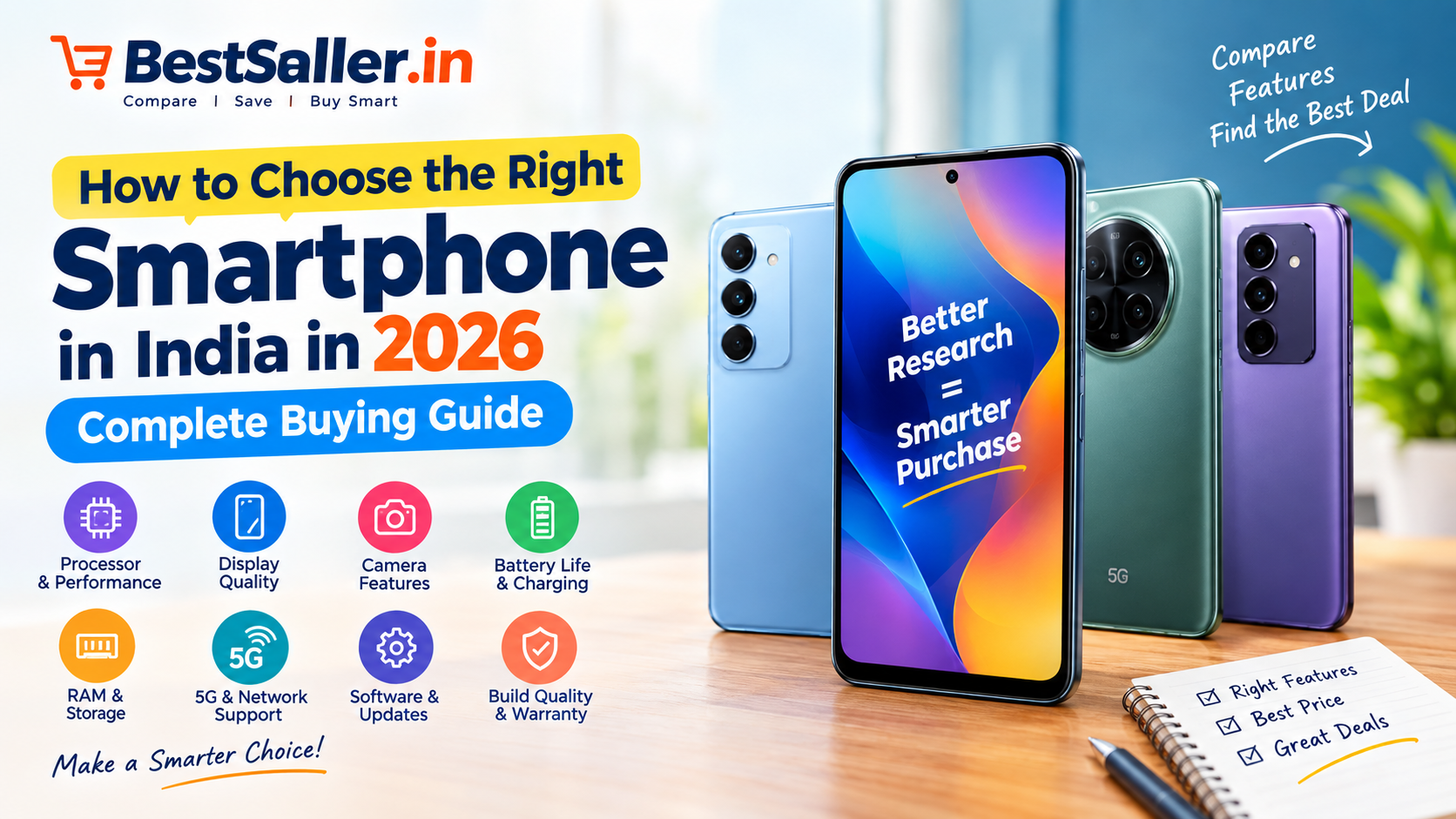
Buying a new smartphone in India can be confusing. There are hundreds of models available across different price ranges, and manufacturers often highlight specifications such as megapixels, RAM, refresh rate, processor speed and fast charging.
But a phone with the biggest number on the specification sheet is not necessarily the right phone for you.
The better approach is to understand what you actually need and then compare smartphones based on performance, display, camera, battery, software, storage, connectivity and long-term value.
This guide explains the most important things to check before buying a smartphone in India in 2026.
Quick Answer: What Should You Check Before Buying a Phone?
Before purchasing a smartphone, compare these important areas:
- Processor and everyday performance
- Display quality
- RAM and storage
- Camera quality
- Battery capacity
- Charging speed
- Software and update support
- 5G connectivity
- Build quality
- Price and current offers
- Warranty and after-sales service
Your priorities should depend on how you use your phone.
A student may prefer battery life and value, while a gamer may need a powerful processor and better cooling. Someone who takes many photos may care more about camera performance, while a business user may prioritize software support, security and reliability.
1. Choose Your Budget First
The easiest way to narrow down your choices is to decide how much you want to spend.
You can broadly divide the smartphone market into several price segments:
Budget smartphones
These phones are generally designed for everyday tasks such as calling, messaging, social media, online payments, video streaming and web browsing.
Mid-range smartphones
This segment can offer a better balance between performance, cameras, displays, battery life and design.
Premium smartphones
Premium models generally focus more heavily on performance, camera systems, materials, displays, software features and long-term support.
Instead of asking, "What is the most expensive phone I can afford?", ask:
That question can help prevent unnecessary spending.
2. Don't Buy a Phone Based Only on RAM
RAM is important, but more RAM does not automatically mean a better smartphone.
For normal users, the overall combination of RAM, processor, storage speed and software optimization matters more than the RAM number alone.
For example, a phone with excellent software optimization and a capable processor can provide a smoother experience than another phone that advertises more RAM but uses weaker hardware.
When comparing phones, look at the complete hardware configuration rather than one specification.
3. The Processor Matters for Performance
The processor affects many aspects of smartphone performance.
It influences:
- App loading
- Gaming
- Multitasking
- Camera processing
- Video recording
- AI-related features
- Battery efficiency
- Overall responsiveness
If you mainly use WhatsApp, YouTube, Instagram, web browsing and banking applications, you may not need the most powerful processor available.
If you play demanding games, edit videos or use resource-intensive applications, processor performance becomes much more important.
4. Check the Display Carefully
The display is one of the components you interact with every day.
Important specifications include:
- Display size
- Resolution
- Panel type
- Refresh rate
- Brightness
- HDR support
- Protection glass
A higher refresh rate can make scrolling and supported animations appear smoother.
However, refresh rate should not be considered in isolation. Display quality, brightness, color reproduction and software optimization also affect the experience.
If you frequently watch movies and videos, a good-quality display can be more noticeable than many other specifications.
5. Don't Judge a Camera by Megapixels Alone
One of the most common mistakes when buying a smartphone is assuming that a higher megapixel number automatically means a better camera.
It doesn't.
Camera performance can depend on:
- Sensor size
- Image processing
- Lens quality
- Optical image stabilization
- Autofocus
- Night photography
- Video stabilization
- Software
- Secondary cameras
Instead of comparing only megapixels, look at real-world camera samples and reviews when possible.
For photography-focused buyers, the main camera should receive more attention than a specification such as the number of cameras on the back.
6. Battery Life Is More Important Than Charging Speed Alone
A smartphone with fast charging can be convenient, but battery life still matters.
When comparing phones, consider:
- Battery capacity
- Processor efficiency
- Display efficiency
- Software optimization
- Charging speed
- Charging technology
If you frequently travel or spend long periods away from a charger, battery endurance may be more important than having the fastest charging system.
7. Should You Buy a 5G Smartphone?
For buyers who want a phone that can remain useful for several years, 5G connectivity may be an important consideration.
However, don't purchase a phone simply because the box says "5G."
Check the complete specification and network-band compatibility relevant to your requirements.
Also compare the processor, display, battery and software support rather than treating 5G as the only deciding factor.
8. Check Storage Before Buying
Storage can become a problem surprisingly quickly.
Photos, videos, applications, games and downloaded files can consume storage over time.
If you take lots of photos or record videos frequently, consider choosing higher internal storage.
Before purchasing, ask yourself:
How much storage am I currently using on my phone?
You can usually find this information in your phone's storage settings.
Your current usage is often a better starting point than simply buying the cheapest storage configuration.
9. Software Updates Matter
A smartphone is more than its hardware.
Software updates can provide:
- Security improvements
- Bug fixes
- New features
- Compatibility improvements
- Better system stability
When comparing two similarly priced phones, check the manufacturer's published software and security-update policy.
A phone that remains supported for longer may provide better long-term value.
10. Check Build Quality
Build quality is particularly important if you plan to use the same phone for several years.
Consider:
- Frame material
- Front and rear protection
- Water or dust resistance
- Button quality
- Weight
- Ergonomics
- Screen protection
A phone that feels good in your hand and survives everyday use can be more valuable than a device that only has impressive specifications on paper.
11. Don't Ignore After-Sales Service
Before buying an expensive smartphone, check whether the brand has convenient service options in your area.
Consider:
- Service-centre availability
- Warranty terms
- Repair options
- Replacement-part availability
- Customer support
A good smartphone is only part of the ownership experience.
12. Compare the Actual Price, Not Just the Listed Price
Smartphone prices can vary between retailers and during promotional periods.
Before purchasing, compare:
- Product price
- Bank offers
- Instant discounts
- Exchange offers
- Cashback
- Coupon discounts
- Delivery charges
- Warranty terms
An advertised discount is useful only when the final price is actually lower.
This is where a deal and comparison website such as BestSaller can be useful: compare the available information before clicking through to the retailer.
13. Read the Limitations Before Buying
Every smartphone has compromises.
One model may have an excellent camera but slower charging.
Another may have excellent performance but average cameras.
A third may have a great display but limited storage.
Don't ask only:
"What is good about this phone?"
Also ask:
"What is missing from this phone?"
Understanding limitations makes product comparisons much more useful.
14. Choose the Phone According to Your Usage
For students
Prioritize:
- Battery life
- Good display
- Reliable performance
- Storage
- 5G
- Value for money
For gaming
Prioritize:
- Processor
- GPU performance
- Cooling
- Display refresh rate
- Battery
- Charging
For photography
Prioritize:
- Main camera sensor
- Image processing
- Stabilization
- Night photography
- Video quality
- Storage
For business users
Prioritize:
- Software stability
- Security updates
- Battery life
- Call quality
- Productivity
- Storage
For content creators
Prioritize:
- Camera quality
- Video recording
- Stabilization
- Processor performance
- Display
- Storage
- Battery
15. Don't Buy a Phone Just Because It Is Trending
A popular smartphone is not automatically the right smartphone for everyone.
Trends change quickly.
A better approach is to compare the phone against your own requirements.
Ask these five questions before buying:
- What is my maximum budget?
- What do I use my phone for most?
- Which feature matters most to me?
- How long do I want to keep the phone?
- What compromises am I willing to accept?
These questions can eliminate many unsuitable options before you even start comparing individual models.
Smartphone Buying Checklist
Before placing your order, check:
☐ Budget
☐ Processor
☐ RAM
☐ Storage
☐ Display
☐ Camera
☐ Battery
☐ Charging
☐ 5G/network compatibility
☐ Software-update policy
☐ Build quality
☐ Warranty
☐ Service availability
☐ Final purchase price
☐ Current retailer offer
Final Thoughts
Choosing a smartphone in 2026 doesn't have to be complicated.
Instead of choosing a phone only because it has the highest RAM, biggest camera number or fastest charging specification, compare the complete package.
Start with your budget, identify the features that matter most to you and then compare performance, display, cameras, battery, software, storage and long-term support.
Most importantly, check the limitations as carefully as the advantages.
A good smartphone is not necessarily the phone with the biggest specification sheet. It is the phone that provides the features you actually need at a price you are comfortable paying.
For current offers, product comparisons and buying guides, check the relevant sections of BestSaller before making your final purchase decision.
Frequently Asked Questions
Which smartphone should I buy in 2026?
The right smartphone depends on your budget and usage. Compare processor performance, display, camera, battery, storage, software support and final price rather than choosing only by brand or specifications.
How much RAM is enough for a smartphone?
The amount of RAM you need depends on your usage. Everyday users generally have different requirements from gamers, content creators and heavy multitaskers. Processor, storage speed and software optimization also affect performance.
Is 5G necessary when buying a new phone?
5G can be useful for buyers who want newer network connectivity and longer-term device usability. However, it should be considered alongside processor performance, battery life, software support and network compatibility.
Is a higher megapixel camera always better?
No. Camera quality depends on several factors, including sensor quality, image processing, stabilization, lenses and software.
What should I check before buying a smartphone online?
Compare the final price, specifications, warranty, seller information, return conditions, available offers and the phone's limitations before placing your order.
Should I buy a smartphone during a sale?
A sale can reduce the purchase price, but compare the actual final price and terms rather than relying only on the advertised discount.
Topics: Buying Guide,how to choose a smartphone,smartphone buying guide India 2026, how to buy a smartphone, best smartphone buying tips, smartphone buying guide, things to check before buying a phone
Comments
Please log in to leave a comment.
No comments yet. Be the first to share your view.