📰 Stay Informed
Credit Cards in India: How They Really Work, What They Cost and How to Use Them Smartly in 2026
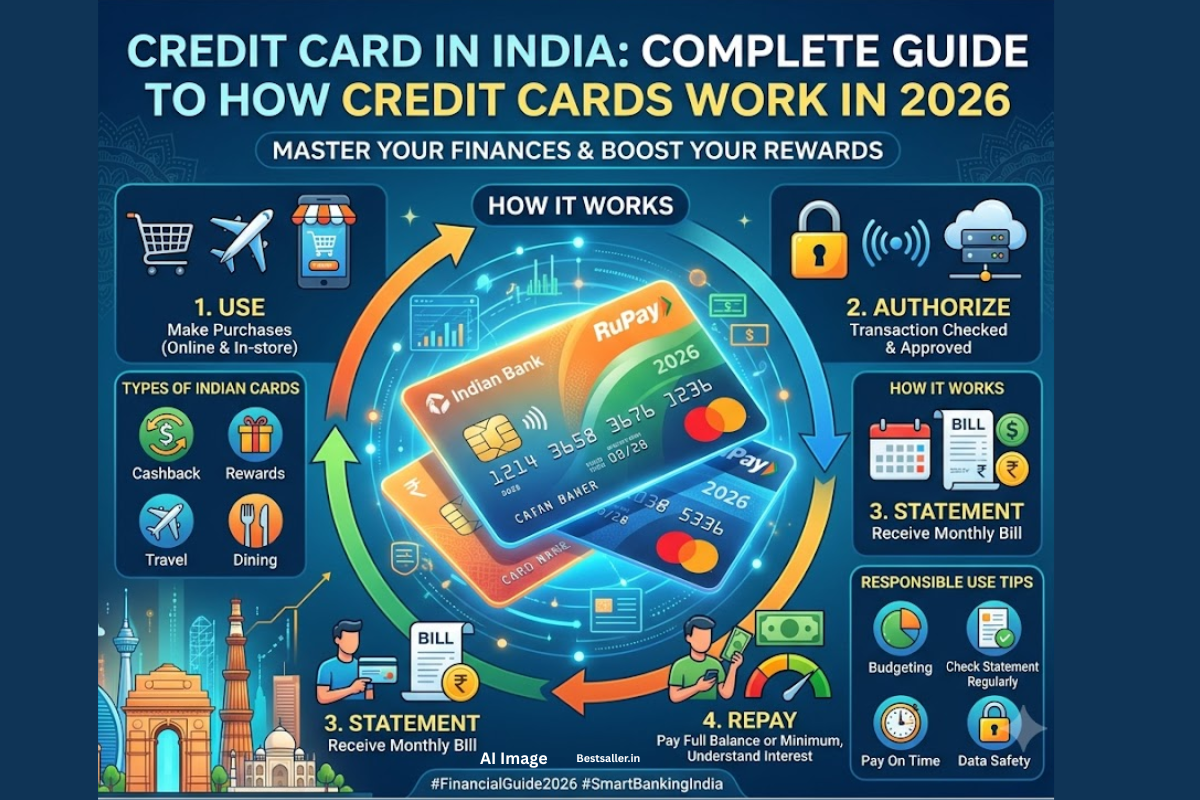
A credit card can be one of the most convenient payment tools you keep in your wallet. You can order something online, pay a restaurant bill, book a flight or handle an unexpected expense without immediately transferring money from your savings account.But there is another side to that convenience.The money available through a credit card is not the same as money sitting in your bank account. It is a credit facility. If you understand how it works and repay what you spend on time, a credit card can be useful. If you keep spending without keeping an eye on the bill, interest and charges can turn a small purchase into a much larger expense.
This is where many first-time card users get confused.The statement may show a total amount due, a minimum amount due, a payment due date, a credit limit, and sometimes several different charges. Looking at all these numbers for the first time can feel complicated.
The good news is that you do not need to be a finance expert to understand a credit card.You simply need to know where the money comes from, when you have to repay it, what happens when you don't repay the full balance, and which charges deserve your attention.This guide explains credit cards in simple terms, with examples relevant to consumers in India.
What Exactly Happens When You Use a Credit Card?
Imagine you go to a supermarket and your bill is Rs 3,500. You tap your credit card and the payment is approved.You haven't taken Rs 3,500 out of your savings account at that moment. Instead, the card issuer has paid the merchant on your behalf, subject to the transaction being processed under the card network and issuer's terms.That Rs 3,500 becomes part of your credit-card balance.Now imagine that during the same billing period you spend another Rs 2,000 on fuel and Rs 4,500 on an online purchase.Your purchases have now reached Rs 10,000, assuming there are no refunds, reversals, fees or other adjustments.At the end of the billing cycle, those transactions can appear on your credit-card statement.This is the basic idea behind a credit card:
You spend first and repay the card issuer later.
That sounds simple, but the important part is what happens between the purchase and the repayment.
Your Credit Limit Is Not Your Monthly Budget
One of the easiest mistakes for a new cardholder is confusing the credit limit with affordable spending.
Suppose your bank gives you a credit limit of Rs 1,50,000.
That doesn't mean you should spend Rs 1,50,000 every month.
The bank is simply telling you the maximum credit facility available under the card's terms. Your personal spending limit should be based on your income, existing commitments and ability to repay.
For example, someone earning Rs 60,000 a month may have a Rs 1.5 lakh credit limit but may only be comfortable putting Rs 15,000–Rs 20,000 of regular expenses on the card.
The unused portion of the credit limit isn't wasted.
In fact, not using the entire limit can make it easier to manage the bill.
A useful question to ask before making a large purchase is:
"If this amount appears on my next credit-card statement, can I comfortably pay it?"
If the answer is no, the credit limit should not be treated as permission to make the purchase.
Understanding the Credit-Card Billing Cycle
Your credit card doesn't necessarily produce a bill every time you make a purchase.Instead, transactions are collected during a particular period called the billing cycle.
For example, let's say your card's billing cycle runs approximately from the 10th of one month to the 9th of the next month.
You might make these purchases:
- Rs 2,000 on the 12th
- Rs 3,500 on the 20th
- Rs 1,800 on the 28th
- Rs 4,000 on the 6th
These transactions may appear together on the statement generated after the billing cycle closes.The statement then gives you a payment due date.The exact dates depend on your card and issuer, so don't assume every credit card follows the same calendar.
The Two Numbers That Cause the Most Confusion
Open almost any credit-card statement and two figures immediately stand out:
Total Amount Due and Minimum Amount Due
They are not interchangeable.
Total Amount Due
This represents the amount shown as payable for the statement period, subject to the card's applicable adjustments and terms.
If your statement says:
Total amount due: Rs 24,000
you should understand that the statement balance is Rs 24,000.
If you have the funds available, paying the applicable total amount due by the due date is generally the straightforward way to clear the statement balance.
Minimum Amount Due
Now suppose the same statement says:
Minimum amount due: Rs 1,200
This does not mean your Rs 24,000 bill has somehow become Rs 1,200.
It means Rs 1,200 is the minimum payment specified by the card issuer under the card's terms.
The remaining amount can continue as an outstanding balance and may attract finance charges.
This distinction is extremely important.
A person can successfully make the minimum payment and still have a significant unpaid credit-card balance.
Why the Minimum Payment Can Be Misleading
The minimum-payment option can be useful when someone is temporarily short of cash, but it should not become a regular repayment strategy.
Let's use a simple example.
You have a statement balance of Rs 40,000.
The minimum payment shown by your issuer is Rs 2,000.
You pay Rs 2,000.
Your immediate payment requirement has been met according to the statement, but you have not paid off the Rs 40,000 balance.
The remaining balance can continue into the next billing period. Depending on the card's terms, interest and other applicable charges can increase the amount you eventually pay.
This is why a person who repeatedly pays only the minimum may feel that the monthly bill is manageable while the overall debt remains for a much longer period.
The Reserve Bank of India requires card issuers to communicate the consequences of making only the minimum payment, including the possibility of prolonged repayment and consequential interest.
For anyone using a credit card, this is worth taking seriously.
When Does Credit-Card Interest Matter?
Credit-card interest is one of the areas where people should read the card's terms carefully.
A card can advertise rewards, cashback or travel benefits, but the cost of carrying an unpaid balance can be much more significant than the value of those rewards.
Whether and how interest is charged depends on the type of transaction, payment behaviour and the issuer's applicable terms.
For ordinary purchases, an interest-free period may apply when the required conditions are satisfied, including payment of the applicable outstanding amount by the due date.
But once a balance is carried forward, the economics can change.
That's why a credit card should not be viewed as a cheap long-term borrowing option simply because there is no interest shown at the checkout screen.
The checkout screen is only the beginning of the transaction.
The statement and repayment terms determine what the purchase ultimately costs you.
Cash Withdrawal From a Credit Card Is Different
Suppose you need Rs 10,000 urgently and decide to withdraw cash using your credit card.
It may appear to be an easy solution because the money is available immediately.
However, cash advances generally have different terms from ordinary purchases. They can involve a cash withdrawal fee and finance charges according to the card's conditions.
Therefore, don't assume that withdrawing cash from a credit card works exactly like making a normal shopping transaction.
Before using a card at an ATM, check the applicable cash advance fee and interest terms.
What Is Credit Utilisation?
Here's another term you'll see frequently when reading about credit cards: credit utilisation.
In simple words, it describes how much of your available revolving credit you are using.
Suppose your card has:
Credit limit = Rs 1,00,000
and your reported outstanding balance is:
Rs 25,000
The utilisation is 25%.
Now imagine that your balance rises to Rs 90,000.
Your utilisation becomes 90%.
TransUnion CIBIL lists credit utilisation among the factors associated with its credit-scoring model, along with areas such as payment history, age of credit and enquiries.
This doesn't mean that a particular percentage automatically produces a particular CIBIL Score. Credit scoring is more complicated than one number.
Still, regularly using a very large portion of your available credit can be worth paying attention to.
Does a Credit Card Affect Your CIBIL Score?
Your credit-card behaviour can become part of your credit history.
For example, your credit report can contain information related to credit accounts and repayment behaviour reported by participating lenders.
CIBIL states that payment history, credit utilisation, age of credit and enquiries are among the factors considered in its scoring model.
That makes payment discipline important.
If you have a credit card, don't think only about rewards and discounts.
Your payment history matters too.
A simple routine can help:
Use the card → receive the statement → check the transactions → pay on time.
If something looks incorrect, contact the card issuer rather than ignoring the statement.
A Credit Card Can Be Useful Without Becoming a Debt Trap
There is nothing inherently wrong with using a credit card.
The problem usually starts when spending becomes disconnected from repayment capacity.
For example, imagine you earn Rs 50,000 a month and normally spend Rs 35,000 on household expenses, rent, travel and other commitments.
If you suddenly put Rs 70,000 of discretionary purchases on a credit card because your available limit allows it, the following month's repayment can become difficult.
The card hasn't increased your income.
It has only moved the payment into the future.
This is an important mindset difference.
Credit can change when you pay. It doesn't necessarily change what you can afford.
Credit Card Fees You Should Actually Look At
Before applying for a card, don't stop reading after seeing the reward percentage.
Look at the fee structure.
Joining Fee
Some cards charge a fee when the card is issued or activated.
The amount and conditions vary by product.
Annual or Renewal Fee
A card may have a yearly membership fee.
Some issuers offer fee waivers when the cardholder reaches a specified spending level.
Cash Withdrawal Charges
Using a credit card to withdraw cash may involve a separate fee.
Late Payment Charges
If payment isn't made according to the card's requirements, applicable late-payment charges may arise.
Foreign Transaction Charges
International spending can involve currency conversion and related charges.
EMI Processing Charges
Some purchases can be converted into EMIs, but the conversion may involve interest, processing fees or other costs.
The lesson is simple:
Don't calculate the value of a credit card using rewards alone.
Calculate the overall cost and benefit based on how you actually intend to use it.
Are Credit-Card Rewards Really Worth It?
Rewards can be useful, but only when they match your normal spending.
Suppose a card offers rewards on online purchases.
If you already spend Rs 10,000 a month online, the reward programme may provide genuine value.
But spending an additional Rs 20,000 simply to earn points doesn't make financial sense if you wouldn't have bought those items otherwise.
The reward isn't free if you had to spend money you didn't need to spend.
When comparing rewards cards, look beyond the headline percentage.
Check:
- Which transactions qualify
- Which transactions are excluded
- Monthly reward limits
- Redemption value
- Expiry rules
- Annual fee
- Fee-waiver requirements
- Minimum redemption requirements
A card that looks attractive in an advertisement may work differently for your particular spending pattern.
Choosing a Credit Card Based on Your Lifestyle
There isn't one credit card that makes sense for every Indian consumer.
Think about where your money already goes.
You Spend Mostly on Groceries
Look for benefits that apply to your regular grocery spending rather than a reward category you rarely use.
You Travel Regularly
Compare travel benefits, reward redemption options, airport-related benefits and foreign transaction charges.
You Prefer Cashback
Calculate realistic annual cashback after considering monthly caps, exclusions and fees.
You Shop Online
Check whether the websites and categories where you actually shop qualify for the advertised benefits.
You're Using Your First Credit Card
Don't select a card simply because it looks premium.
Understand the annual fee, billing cycle, repayment rules and charges first.
A complicated reward structure isn't necessarily useful if you don't understand how to use it.
Five Habits That Can Make Credit-Card Management Easier
1. Keep the Due Date in Your Calendar
Don't rely entirely on remembering the date.
Use a calendar reminder or your bank's payment reminder facility.
2. Check the Statement
Spend a few minutes reviewing the transactions.
This can help identify unfamiliar charges, duplicate transactions or other issues.
3. Keep Money Ready Before the Due Date
If you know your credit-card bill is coming, don't wait until the last minute to arrange funds.
4. Don't Spend Just Because There Is Available Credit
Available credit is not disposable income.
5. Be Careful With Multiple Cards
Having several cards can provide flexibility, but it also means more payment dates, more statements and potentially more fees to track.
If you cannot comfortably manage them, additional cards may create unnecessary complexity.
What If You Already Have a Large Credit-Card Balance?
Don't ignore it.
If your credit-card balance has become difficult to manage, first understand exactly how much you owe and what interest and charges are being applied.
Then look at your monthly cash flow.
You may need to reduce discretionary spending, stop adding new purchases to the balance and create a realistic repayment plan.
If necessary, speak directly with the card issuer about the options available under your account.
Avoid taking another expensive form of borrowing simply because it temporarily makes the credit-card statement look smaller.
The right solution depends on the individual's financial circumstances.
Credit Card vs Debit Card: Which Works Differently?
The easiest way to understand the difference is to ask where the money comes from.
With a debit card, the transaction is generally linked to your bank account.
With a credit card, the issuer provides a credit facility that you repay later.
For example:
| Feature | Credit Card | Debit Card |
|---|---|---|
| Payment source | Credit facility | Bank account |
| Statement | Yes | Usually no monthly credit statement |
| Interest on unpaid purchase balance | Can apply | Normally not applicable to ordinary purchases |
| Credit history | Can affect credit profile | Generally not a revolving-credit account |
| Rewards | Depends on card | Depends on card/bank |
| Repayment required | Yes | Money is generally deducted from account |
The choice between the two isn't simply about which card looks better.
It is about how you manage your money.
What Should You Check Before Applying for a Credit Card?
Before clicking the application button, spend a few minutes checking the product's current terms.
Look for:
1. Annual fee
How much does the card cost each year?
2. Interest rate
What happens if you carry a balance?
3. Reward structure
Are the rewards actually relevant to your spending?
4. Exclusions
Which transactions don't earn rewards?
5. Fee-waiver conditions
Do you need to spend a particular amount to avoid the annual fee?
6. Cash withdrawal terms
What does an ATM withdrawal cost?
7. EMI terms
What interest and processing charges apply?
8. Foreign transaction charges
Important if you regularly make international purchases.
9. Eligibility
Check the issuer's current eligibility criteria rather than assuming approval.
10. Customer support and dispute process
Understand how you can report an unauthorised transaction or billing issue.
A Simple Example of Responsible Credit-Card Use
Let's say your monthly income is Rs 60,000.
You normally spend Rs 12,000 on groceries, Rs 5,000 on fuel and transport, and Rs 3,000 on online shopping.
Your regular card spending could therefore be around Rs 20,000.
You use the card for these expenses and keep approximately Rs 20,000 available in your budget to pay the statement.
When the bill arrives, you review the transactions and pay the applicable total amount due by the payment deadline.
The card is being used as a payment tool.
Now compare that with a situation where you earn Rs 60,000 but spend Rs 55,000 on the card on things you didn't budget for.
The same credit card suddenly becomes much harder to manage.
The difference isn't the card.
The difference is the repayment capacity behind the spending.
Common Credit-Card Myths
Myth 1: "The minimum due is my actual bill. - No.
It is the minimum amount required under the card's terms. The remaining balance can continue to be payable.
Myth 2: "A high credit limit means I can afford expensive purchases." - No.
The credit limit is determined by the issuer. Your affordability depends on your finances.
Myth 3: "Rewards mean I should use the card for everything." - Not necessarily.
Rewards only make sense when they come from spending you would otherwise make.
Myth 4: "Credit cards are always bad." - Not necessarily.
A responsibly managed credit card can be convenient and may provide rewards and other benefits.
Myth 5: "One missed payment doesn't matter."
A missed payment can result in charges and may have consequences for your credit history. It is better to treat payment dates seriously.
Final Checklist for New Credit-Card Users
If you are using a credit card for the first time, keep these points in mind:
- Know your billing date.
- Know your payment due date.
- Understand total amount due.
- Understand minimum amount due.
- Check the interest rate.
- Know the annual fee.
- Review your statement every month.
- Don't spend simply because credit is available.
- Be careful with cash withdrawals.
- Understand EMI costs before converting purchases.
- Keep track of credit utilisation.
- Pay your bills according to the card's terms.
- Check your credit report periodically.
- Read the card's current terms before relying on a particular benefit.
Frequently Asked Questions About Credit Cards in India
Is a credit card a loan?
A credit card provides a revolving credit facility rather than functioning exactly like a traditional fixed-term personal loan. Purchases create an outstanding balance that you repay according to the card's billing and payment terms.
Can I avoid credit-card interest?
For eligible transactions, an interest-free period may apply when the applicable conditions are met, including paying the required outstanding amount by the due date. The exact terms depend on the card.
What is the minimum amount due?
It is the minimum payment specified by the card issuer for a billing statement. Paying it does not necessarily clear the entire outstanding balance.
Does using a credit card improve CIBIL Score?
Credit-card activity can form part of your credit history. Payment behaviour, credit utilisation and other factors are considered in credit scoring. However, simply having a credit card does not guarantee a particular score.
Is a Rs 1 lakh credit limit good?
A credit limit cannot be judged in isolation. What matters is whether the facility is appropriate for your financial situation and whether you can manage the resulting payments responsibly.
Should I have more than one credit card?
That depends on your needs and ability to manage multiple accounts. More cards can mean more benefits, but they also mean more statements, fees and payment dates to monitor.
Is cashback better than reward points?
Neither is automatically better. Compare the actual value you receive based on your spending, redemption options, limits, exclusions and annual fees.
Can I withdraw cash from my credit card?
Many credit cards allow cash withdrawals, but the applicable charges and finance terms can differ from normal purchases. Check your card's terms before using this facility.
Conclusion: Use the Card, But Keep Control of the Money
Credit cards are neither magic money nor something consumers automatically need to avoid.They are financial tools.Used carefully, a card can make everyday payments convenient, provide rewards and offer access to short-term credit. Used without a repayment plan, the same card can create an expensive outstanding balance.The most useful habit is surprisingly simple: know what you spend and know how you will repay it.
Don't choose a card only because an advertisement promises cashback or reward points. Look at the complete picture—annual fees, interest rates, exclusions, payment rules, credit limit, reward conditions and your own spending habits.And when the statement arrives, don't look only at the minimum amount due.Look at the entire bill.That one habit can make a significant difference to the way you manage credit.
About BestSaller Finance
BestSaller Finance publishes easy-to-understand information about banking, credit cards, loans, financial products and other personal-finance topics for Indian readers.Our goal is to explain financial terms in practical language so readers can understand the product before making their own decision.
Note - Financial information can change over time. Always verify current rates, fees, eligibility requirements and product terms directly with the relevant financial institution before applying. For More Credit Card.
Topics: Guide, How Credit Cards Work in 2026,best credit card in India 2026, lifetime free credit card, credit card comparison India 2026
Comments
Please log in to leave a comment.
No comments yet. Be the first to share your view.